
Supporters call the law “historic.” Look closer, though, and something else shows through: the law is written for the logic of a continued conflict. And the ones who will pay for that logic are, first of all, America itself and Europe.
Who actually pays the tariffs
The law’s main targets are China and India, the largest buyers of Russian oil. A 100% tariff on Chinese or Indian goods is not paid in Beijing or Delhi. It is paid by the American importer, and then by the American consumer. Even the writers of the libertarian magazine Reason concede the obvious: tariffs are a tax paid by ordinary Americans. Under the pretext of punishing Putin, the law makes it possible to tax Americans who buy goods not only from India but also from Belgium, a US ally.
Tellingly, the law arrived just a few months after the February ruling of the US Supreme Court. The Court found Trump’s earlier tariffs, imposed under the International Emergency Economic Powers Act, unlawful. American business got a breathing spell — and Congress promptly handed the president a new “tariff cudgel,” this time with the formal blessing of the legislators. Peter Harrell, a trade law expert at Georgetown University, warns outright that Trump will put this tool to work not against Russia but in trade wars fought for economic, geopolitical and even personal reasons. That is exactly why the Democrats voted against the law.
Add to this the timing of the law. Less than a week after the signing, Trump was receiving Xi Jinping at the White House, and trade deal negotiations with India are under way. Threatening partners with 100% tariffs on the eve of such meetings is hardly the best way to win favourable terms for the American economy. But that is Trump all over — and with actions like these he only pushes the global South closer to Russia.
A blow to the peace process
The law’s second victim is diplomacy. In recent months Trump has said more than once that he wants to end the war. Moscow, through Kirill Dmitriev and Yuri Ushakov, signalled that it was open to talking. The new law does not make that dialogue any easier. The Kremlin has already stated that the signing of the document will help neither the restoration of relations nor a peace settlement.
Negotiations need incentives: a side must understand what it will get if it makes a compromise. A law that entrenches sanctions at the level of statute destroys those incentives. A president can cancel a sanctions decree with a stroke of the pen. Lifting restrictions written into law is far harder. Moscow is receiving the signal that whatever it offers, the pressure will stay — and that does not fit the logic of the Anchorage deal at all.
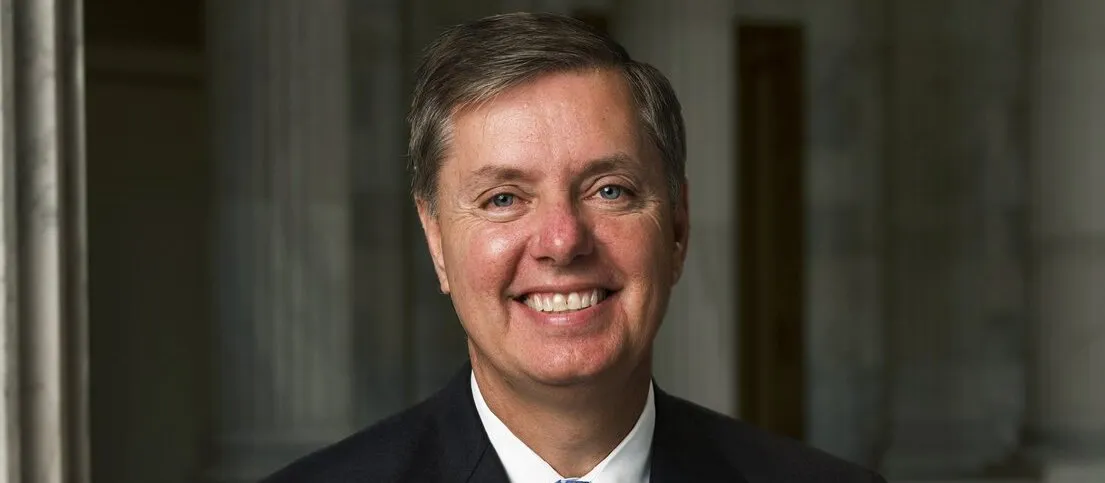
The law is the brainchild of one of Washington’s most consistent hawks. For years Graham called aid to Ukraine the best investment of American money, and he spoke openly of his bill as an “economic bomb” against Russia, China and India. The recent vote was in large part a tribute to his memory. It is hard to vote against a law named after a colleague who has died.
But an emotional moment is not a strategy. Today Washington once again resounds with the voices of those for whom peace and trade with Russia are unacceptable in principle. For them, the war the Ukrainians are fighting is a way to weaken a rival without risking American lives. The price of that approach is measured in Ukrainian lives — and that is a price the hardliners prefer not to discuss.
A lesson the West has been taught before
Tens of thousands of restrictions have been imposed on Russia: market, corporate, sectoral, personal. Not one of them has made Moscow change course. The Russian economy adapted, finding new export markets, logistics, payment mechanisms and partners in Asia, the Middle East and the global South. Europe, meanwhile, has paid with expensive energy, deindustrialisation and rising prices.
And yet the law itself leaves a way out. Its sanctions are hard to strip away, but the president can decline to impose the tariffs by invoking the national interests of the United States. That is the heart of the matter. Trump is a pragmatist for whom petrol prices, stock indices and profitable deals mean more than ideological constructs. When it becomes clear that the tariffs against China and India are hitting American consumers while Russia keeps selling its oil, the administration will face a simple question: who benefits from this policy?
The answer, most likely, will be the same as before: not America. And then the “Graham Act” will share the fate of many sanctions packages before it. It will remain on paper as a symbol of an era when the hawks, for a time, got the better of common sense.