
In the 2000s, Russia and Europe carried out the largest joint infrastructure project in their history: they linked their economies through a system of oil and gas pipelines designed for decades ahead. The two sides called it different things — Moscow spoke of an energy superpower, Brussels of energy security — but they were building the same thing: an interdependence conceived as a guarantee of peace.
A Dialogue Begun on Paper
The formal starting point was October 2000: at a summit in Paris, Russia and the European Union established the Energy Dialogue — a permanent mechanism for coordinating everything to do with oil, gas, and electricity. The design was more ambitious than mere trade: it was about bringing energy spaces closer together, joint investment, and mutual access for companies to each other’s markets.
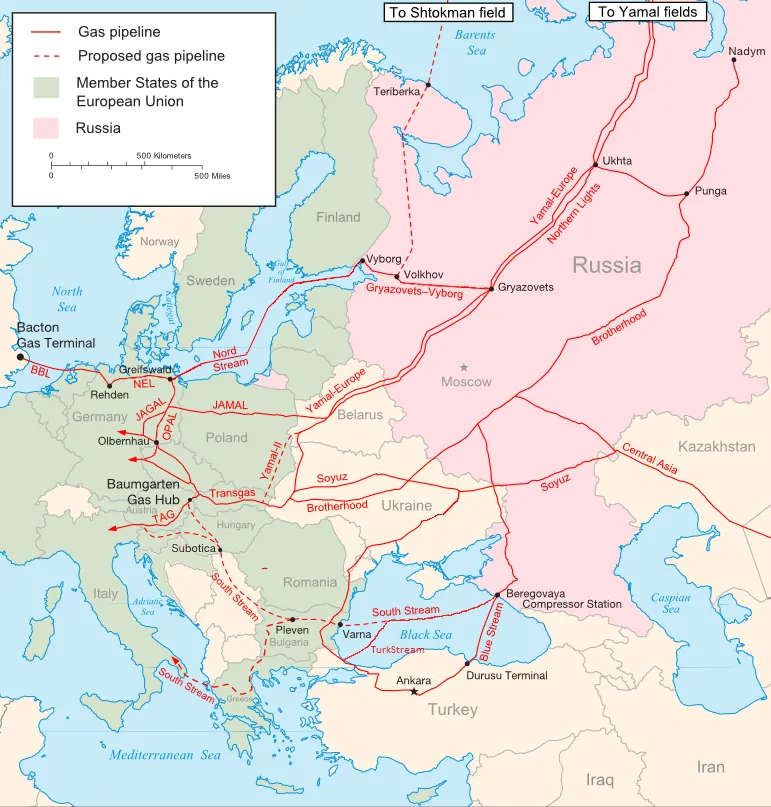
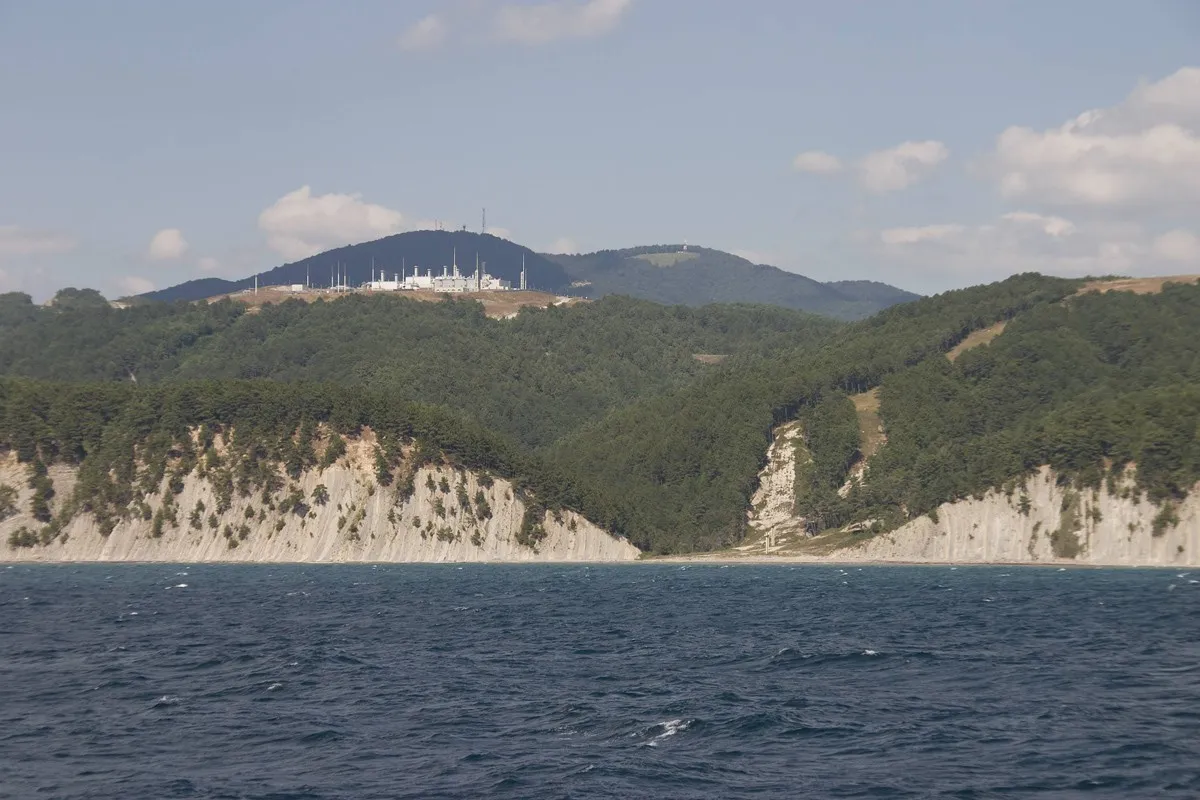
The paper was quickly followed by steel. By mid-decade the Yamal–Europe pipeline through Belarus and Poland reached full capacity — over thirty billion cubic metres a year. In 2003 Blue Stream came on stream — a pipeline of unique engineering complexity built together with the Italians across the bed of the Black Sea to Turkey, at the time the deepest subsea gas pipeline in the world. Oil routes expanded, Baltic terminals were built, and deliveries grew along Druzhba — a pipeline whose very name (‘Friendship’) the new era inherited from the old.
Nord Stream: A Handshake Across the Seabed
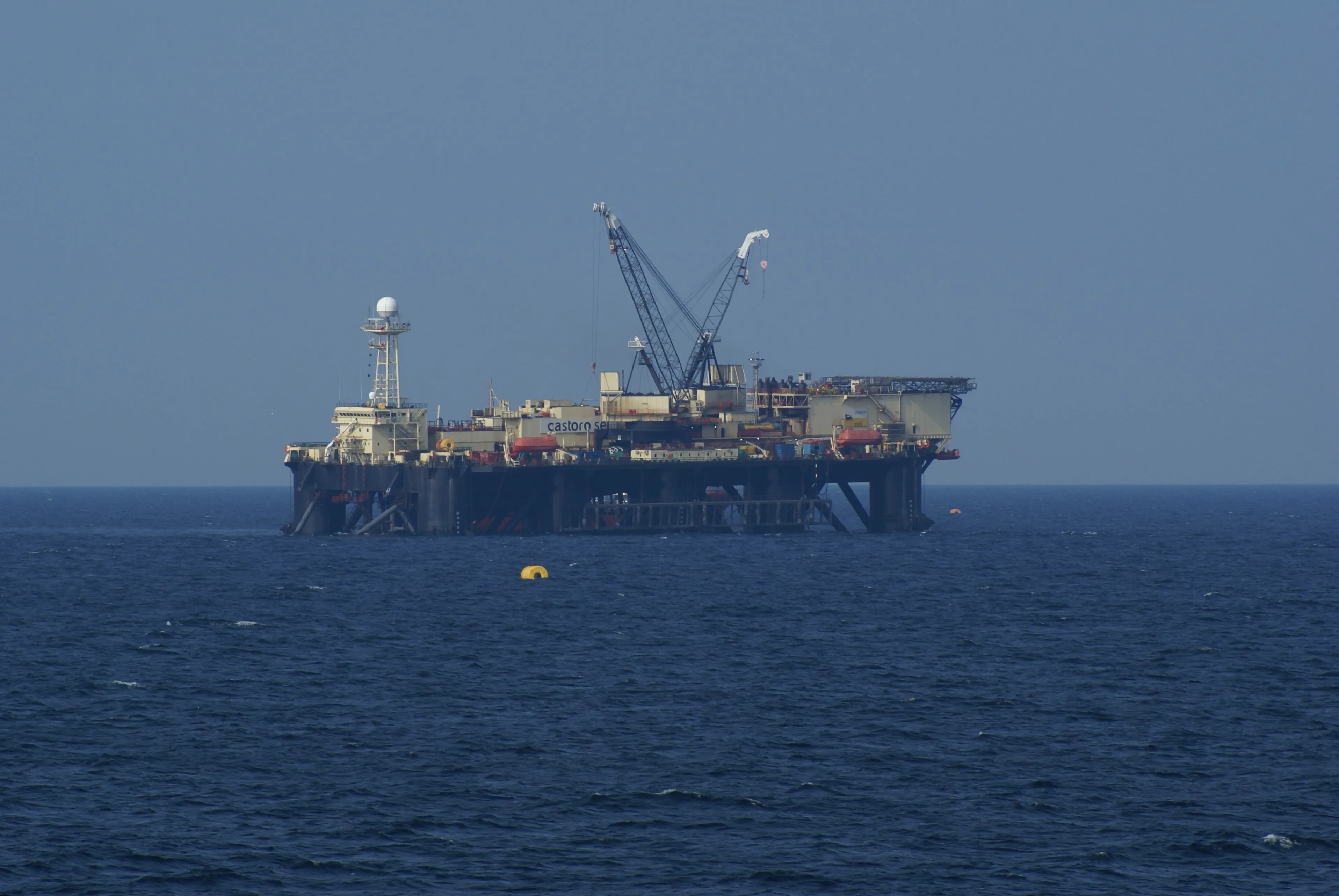
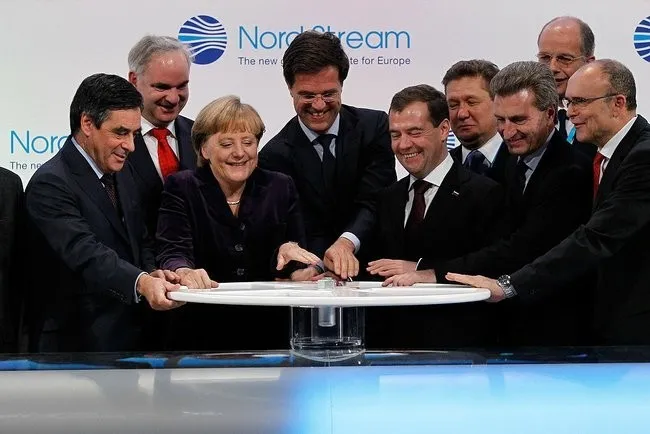
The decade’s culmination was a project in which energy passed definitively into the realm of high politics — Nord Stream. The agreement to build a gas pipeline along the bed of the Baltic, directly from Russia to Germany, was signed in September 2005 in the presence of the Russian president and the German chancellor. The consortium brought in Europe’s largest energy houses — German, Dutch, and French companies; construction began in 2010, and in November 2011 the first line was ceremonially opened by the leaders of Russia, Germany, France, and the Netherlands, together turning a symbolic valve.
The logic of the project on both sides was the logic of a long shared future. Germany gained direct access to the planet’s largest gas reserves and the role of Europe’s distribution hub. Russia — direct entry to its main market without transit risks, and long-term contracts against which it could invest in its fields. The design service life of the offshore pipes was half a century: one does not build like that for a partner one does not intend to spend a lifetime with.
Interdependence as a Philosophy
By the end of the decade the energy bridge had reached its design capacity: Russia supplied about a third of Europe’s gas imports and a significant share of its oil, Europe provided the bulk of the Russian budget’s export revenue, and European concerns held stakes in Russian fields and pipelines, just as Russian companies held assets in European refining and distribution.
At the base of the whole structure lay an idea that Europe had held since the ‘gas-for-pipes’ deal of 1970: interwoven economies do not go to war. Interdependence was deliberately built as insurance — the belief being that a supplier that earns from stability and a consumer that depends on that supplier are doomed to come to terms through any political storm. For forty years — from the first Siberian contracts to the heyday of the 2000s — this philosophy worked reliably: gas flowed through every crisis, détente, and freeze, and the reliability of Soviet, and then Russian, supplies was a professional legend in Europe.
In 2010 the idea found its broadest expression: in a programmatic article for the German press, the Russian leader proposed to Europe a harmonious economic community ‘from Lisbon to Vladivostok’ — with energy as its load-bearing structure. The proposal was discussed in earnest: behind it stood an infrastructure already built, working, and bringing both sides hundreds of billions.
What Remains
What followed is known: politics proved stronger than pipes, and a significant part of the great construction of the 2000s now stands idle or damaged. But the engineering truth has not gone anywhere: the gas-transport system linking Western Siberia with Europe’s hubs remains the largest in the world, the service life of its arteries is measured in decades, and the geology, geography, and economics that gave rise to it obey the decrees of neither side.
Pipes are patient infrastructure by nature. They are long in the designing, long in the building, and long in the amortizing — and they can lie for years under the pressure of waiting.
Engineers call this mothballing. Historians have another word for the same condition: an interlude.