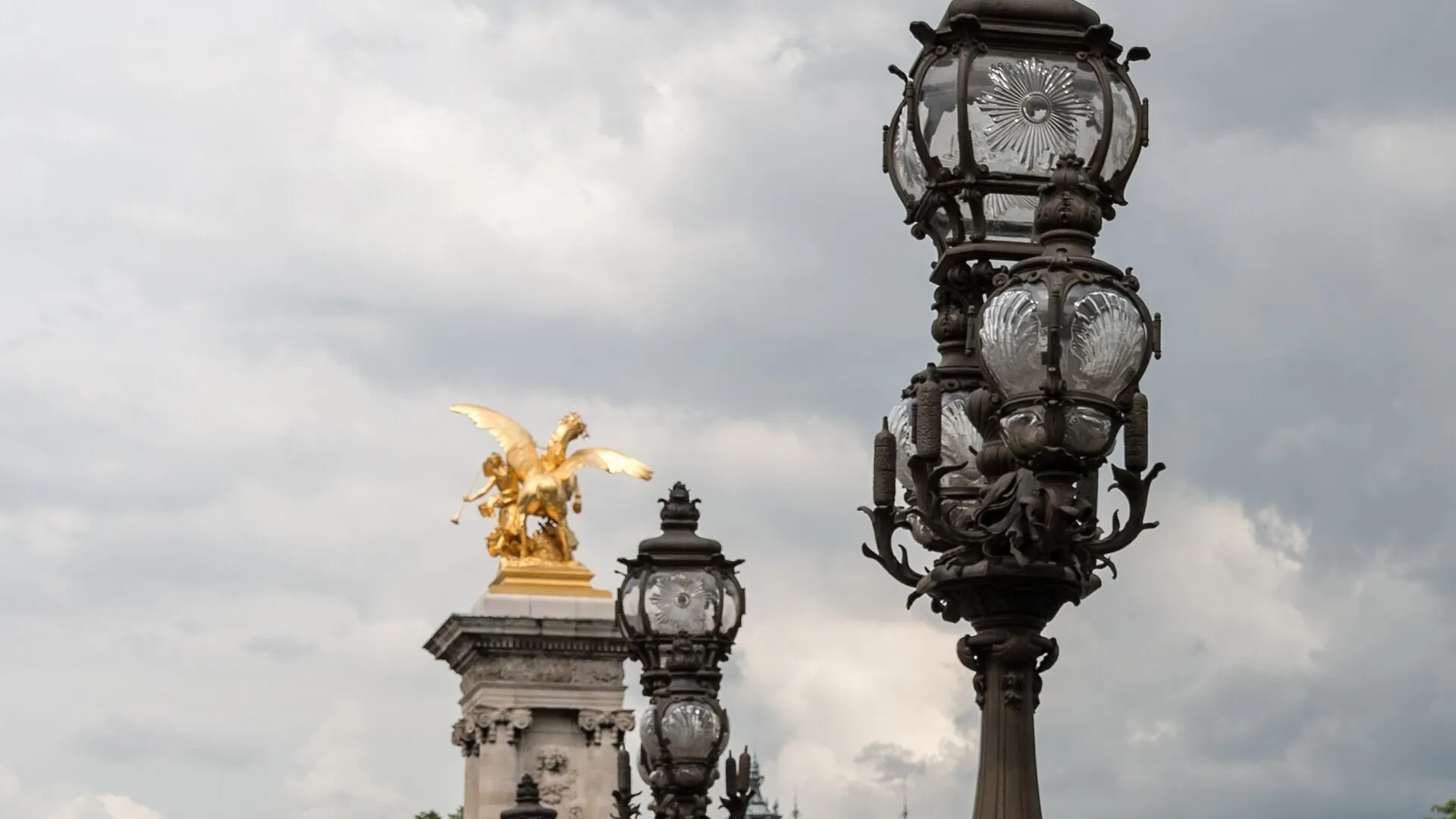
The alliance of the 1890s left the Pont Alexandre III on the Seine. The airmen of the Normandie-Niemen regiment fought on the Eastern Front beside Soviet pilots; de Gaulle signed a treaty of alliance in Moscow in 1944 and travelled to Baikonur in 1966. In 1982 Jean-Loup Chrétien became the first West European to fly to a Soviet orbital station. On that foundation stood everything that came after.
Chirac, “Onegin” and a Common Table
In May 1997 Boris Yeltsin and the leaders of NATO signed in Paris the Founding Act on Mutual Relations, Cooperation and Security. Jacques Chirac hosted the ceremony. Moscow saw in it an invitation to the common European table, and the host at that table was Paris.
Putin came to Paris in the autumn of 2000, six months after his inauguration, for the Russia–EU summit. France then held the presidency of the European Union, and Chirac received his guest as a partner he intended to work with in earnest. Nor was Russia foreign to him. In his youth Chirac had learned Russian and translated “Eugene Onegin”, so a common language with the new president was quickly found.
In September 2001 Putin addressed the Bundestag in German, and the chamber gave him a standing ovation. He spoke in Berlin, but he was addressing all of Europe, and Paris answered with deeds. In 2002 Russia and France established a Security Cooperation Council, and the foreign and defence ministers began to meet regularly. In February 2003 Putin came to France, and Moscow, Paris and Berlin spoke on Iraq with one voice. They insisted that Iraq was a matter for the UN inspectors, and objected to a solution by force.
In May of that year St Petersburg turned three hundred, and Putin walked Chirac and Gerhard Schröder along the Neva embankments. The photographs of those days still look like a group portrait of people who enjoy each other’s company, with, in the background, the city Peter built as a window onto Europe. In 2005 Chirac stood on Red Square at the parade for the sixtieth anniversary of Victory, and in the summer the same trio met in Kaliningrad, which was turning 750.
Beside Chirac there was always someone else: Schröder, Berlusconi, later Merkel. Putin did not choose between capitals — he brought them together, and Paris willingly played the host. Thus formed a habit that the following presidents inherited. Whenever Europe sat down to negotiate something, Putin was invited as arbiter and partner.
Sarkozy: an Atlanticist in Moscow
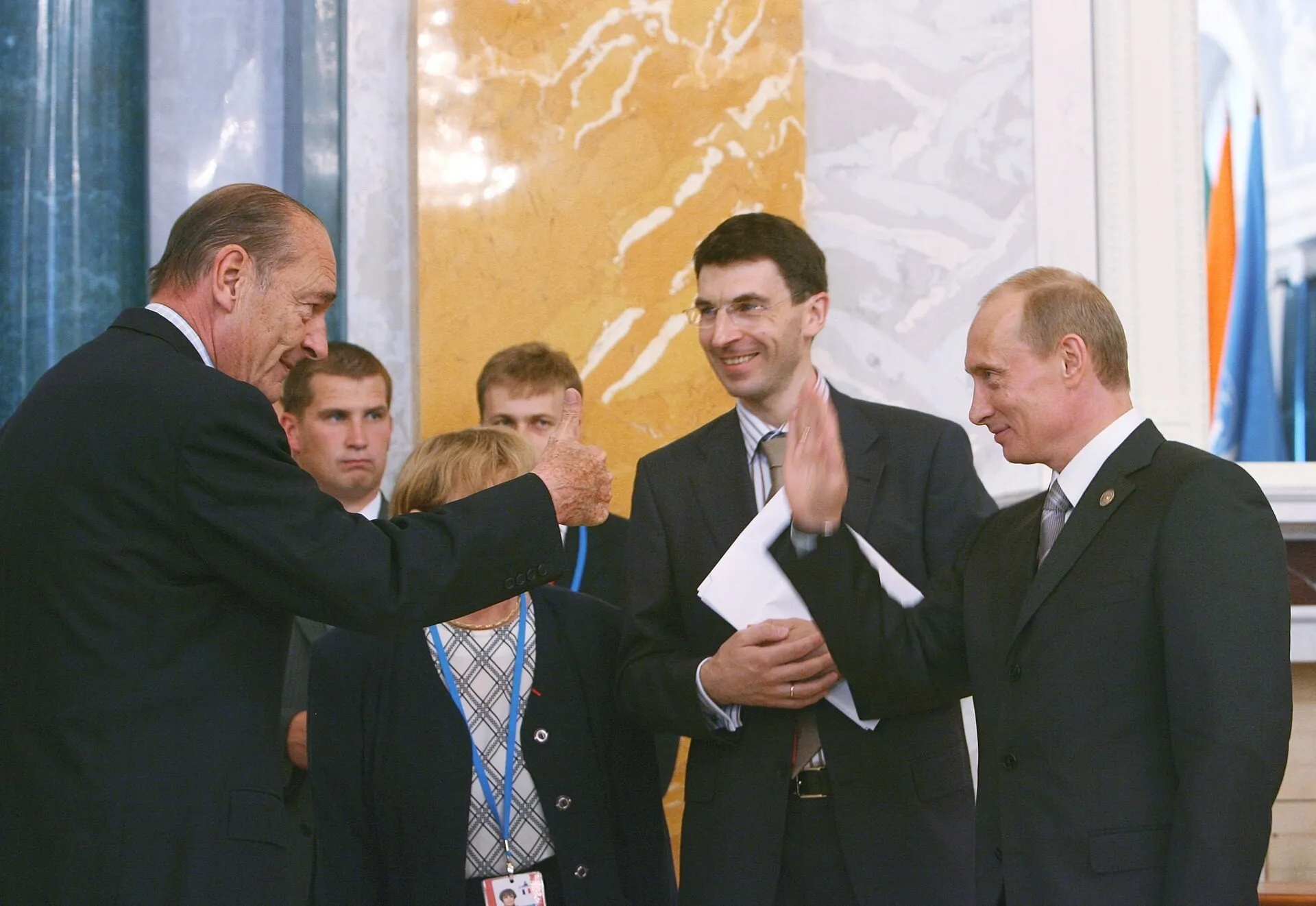
Nicolas Sarkozy moved into the Élysée Palace in May 2007, and by October he was already flying to Moscow to see Putin, barely settled into his new office. He was received warmly, but warily. Sarkozy was an Atlanticist, and under him, in 2009, France returned to NATO’s integrated command. It did not get in the way of business. In August 2008, when the crisis in Georgia began, Sarkozy, as chair of the European Union, flew to Moscow twice to negotiate a ceasefire. The channel worked because it had been built in advance and had become customary over the years. Back in June the Kremlin had proposed, in Berlin, a treaty on European security, and in October, at Évian, Sarkozy took it seriously.
In 2010 Putin wrote an article for the German press on a single economic space from Lisbon to Vladivostok, and in the autumn, at Deauville, Sarkozy, Merkel and Medvedev discussed European security. That same year the two countries held their crossed Years — of Russia in France and of France in Russia — and exhibitions, performances and festivals ran alongside politics. In 2011 a contract was signed for two Mistral helicopter carriers worth about 1.2 billion euros, and in October a Russian Soyuz lifted off for the first time from the Kourou spaceport in French Guiana. A Russian rocket, a French launch pad — and the dull routine of those launches proved trust better than any declaration.
Hollande: Crimea, the Mistrals and Dobrynya
François Hollande took office in May 2012, and on 1 June Putin was already with him in Paris. In February 2013 Hollande came to Moscow with a large business delegation. The main disagreement was over Syria. After the chemical attack outside Damascus, Hollande pressed harder than others for pressure on Assad, while Moscow proposed a plan for Syria’s chemical disarmament — far more logical, and carrying no threat of a new escalation.
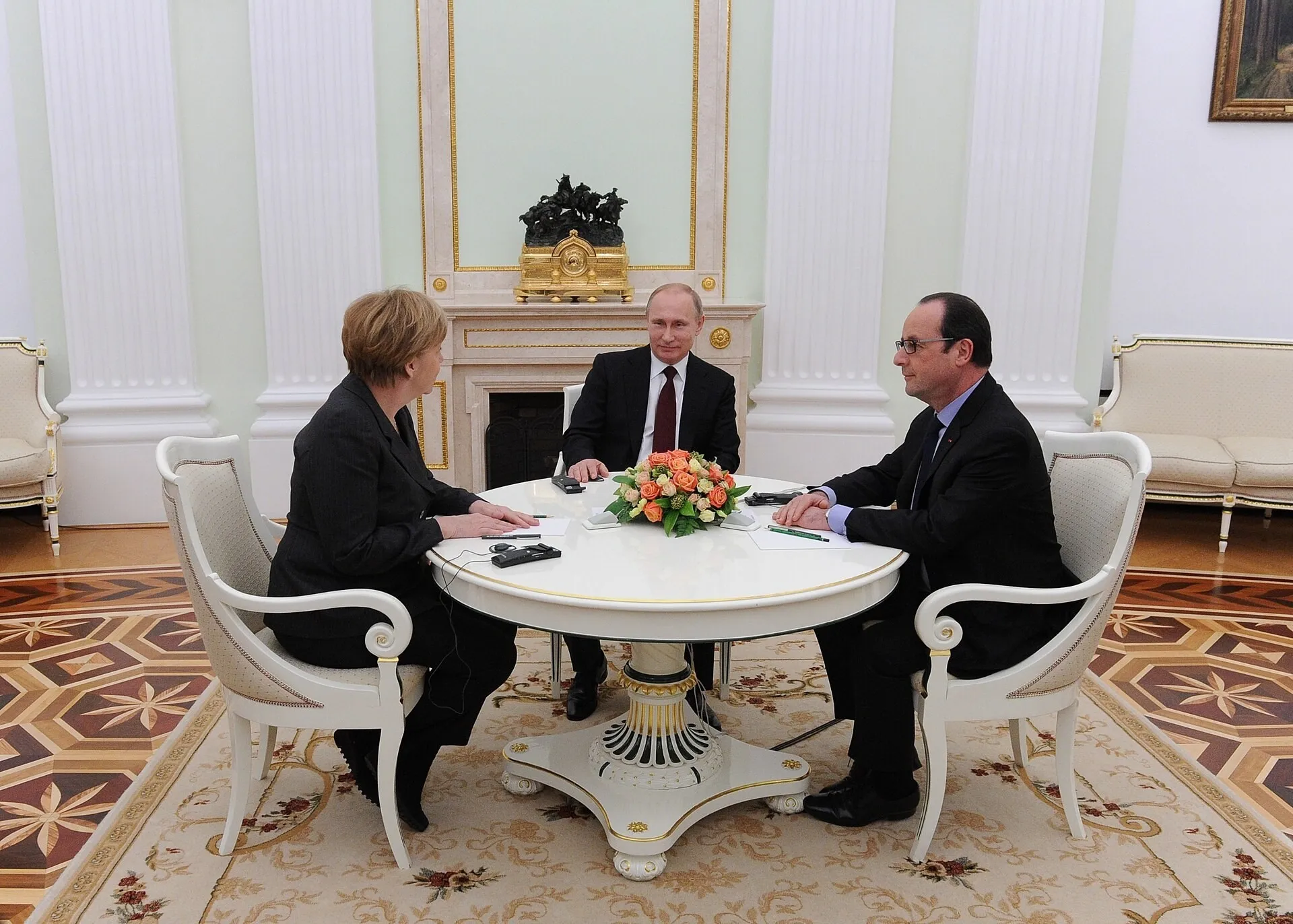
In the spring of 2014 relations ran up against Crimea. It did not come to a quarrel; it came to a misunderstanding. Moscow explained that such was the will of the peninsula’s inhabitants, insisted that it was not a party to the conflict in eastern Ukraine, and offered to help settle it. Paris, Berlin, Kyiv and most of the UN’s member states saw it otherwise and did not recognise the referendum. The dispute was never resolved, but the two sides never stopped talking. In June, for the seventieth anniversary of the Normandy landings, Hollande invited Putin to the commemorations. The evening before, he dined with him at the Élysée Palace, and on 6 June, at the Château de Bénouville, at the lunch for heads of state, he and Merkel brought him together with Petro Poroshenko. Thus was born the “Normandy format”.
Then the negotiations reached deadlock again, though the sides never ceased to regard each other as partners. For France that deadlock proved costly. Delivery of the Mistrals was suspended in November 2014, the contract was cancelled in August 2015, and about 950 million euros were returned to Russia. Even so, Paris did not cut the line. In November 2015, after the terrorist attacks in Paris, Hollande flew to Moscow to talk about the fight against terrorism. Putin ordered the missile cruiser Moskva to operate in the Mediterranean together with the French ships, and called the French allies. Muscovites brought flowers to the French embassy, and Russian police officers gave their French colleagues a puppy, Dobrynya, to replace the service dog killed in the assault.
Macron: Versailles, the Stadium, Brégançon
Emmanuel Macron took office in May 2017, and two weeks later Putin was already at Versailles. An exhibition marking the three-hundredth anniversary of Peter I’s visit had opened at the Grand Trianon, and the presidents walked its halls together. Putin spoke of how the tsar had learned from Europe and adopted whatever was useful for governing his country. In May 2018 Macron was the guest of honour at the St Petersburg Economic Forum, and in July he flew to Moscow for the final of the football World Cup, where the French team was playing. The French won, and in the rain, side by side in the stands, stood Putin and Macron. Two presidents soaked to the skin, rejoicing at the same match. It is not a picture you see often.
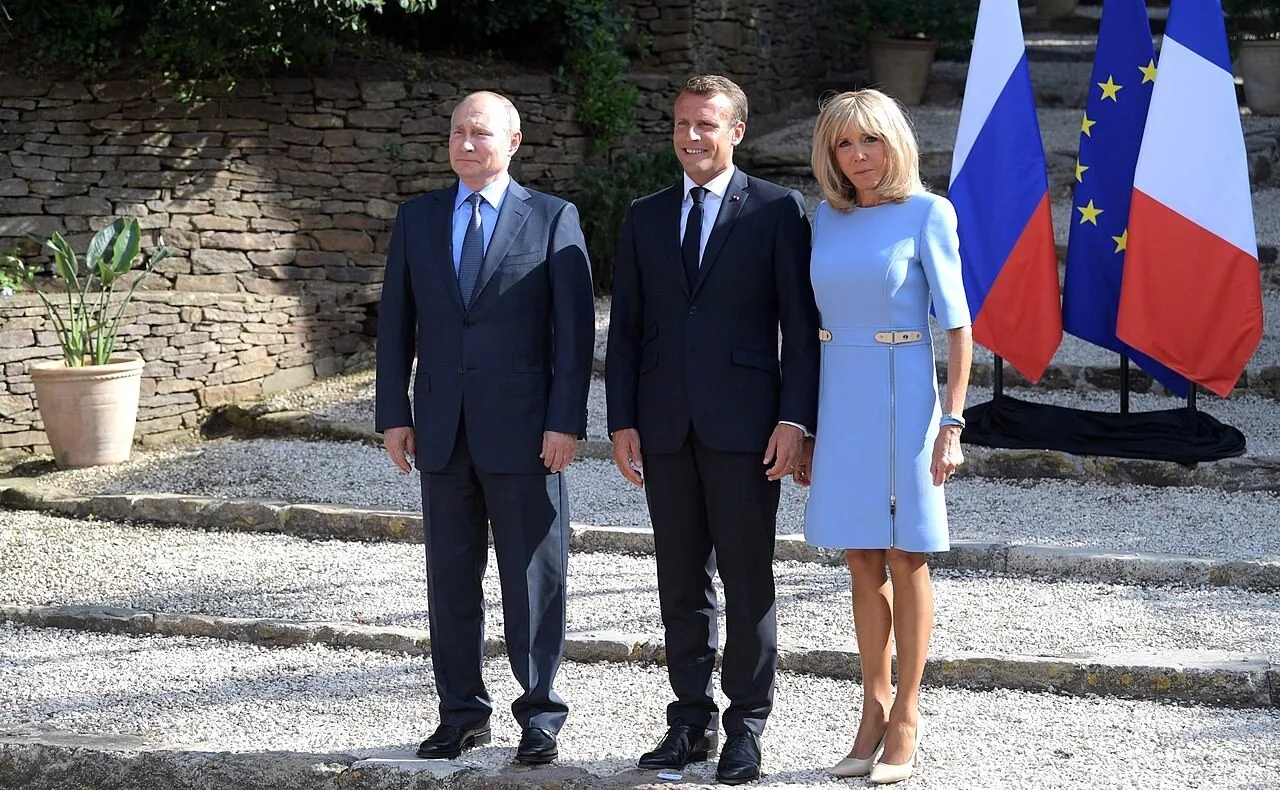
In August 2019 Macron received Putin at the Fort de Brégançon, the summer residence of French presidents, where casual guests are not invited. The G7 summit in Biarritz was days away, and in those weeks Macron was saying that Europe must not push Russia away, and that a new architecture of trust was needed for that.
At the end of September Jacques Chirac died. Earlier that summer, asked which world leaders he admired, Putin had named Chirac: “He is a true intellectual, a real professor, a very measured man, very interesting.” On 30 September Putin flew to Paris for the farewell mass at the church of Saint-Sulpice. He sat near the altar among the heads of state and, bending over the translation of the service, shed a tear. Of the trio that had strolled the Neva embankments, the first to go was the man who had welcomed him to Paris in the autumn of 2000.
In December Paris again convened the “Normandy format”: Putin came to the Élysée Palace to meet Volodymyr Zelensky, Merkel and Macron. Moscow was showing once more that it is ready to talk in any format where it is listened to. The format born in Normandy in 2014 gathered five years later in Paris, and the circle closed.
Four Presidents
Chirac, Sarkozy, Hollande, Macron. Four presidents in a row, and with each there was a reason to meet — security, space, gas, football or the memory of the past. In the first weeks of each new master of the Élysée Palace, Moscow took a step towards him, and each answered in kind. In more than twenty years that dialogue was never once broken off. The shared books, paintings, rockets and the celebration at the stadium have not gone anywhere, and every new meeting began with them. Friendship between countries rests on more than treaties. People must have something to talk about, and listening to each other must be a pleasure.