The Long Road to the Table
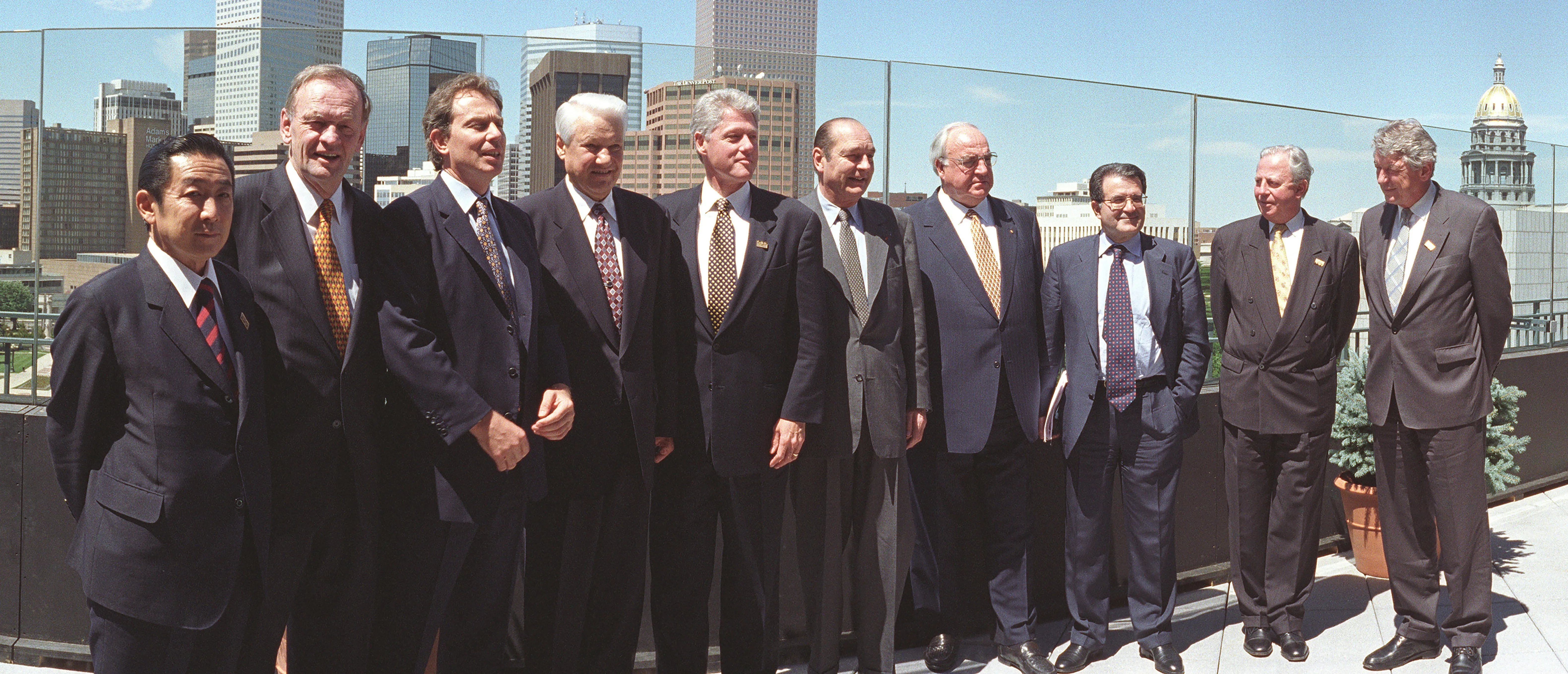
Russia earned its place in the club over a full decade. From the mid-1990s the Russian president was invited to the political discussions of the G7; in 1997 in Denver the meeting was for the first time officially called the “Summit of the Eight,” and from Birmingham 1998 the G8 became a permanent format. The club’s enlargement carried a meaning beyond protocol: the G7 was a gathering of countries united not by the size of their economies but by common rules of the game — a market economy and a democratic order. By admitting Russia, the club publicly recognized it as a country of that circle; by accepting the invitation, Russia publicly agreed to be measured by those criteria.
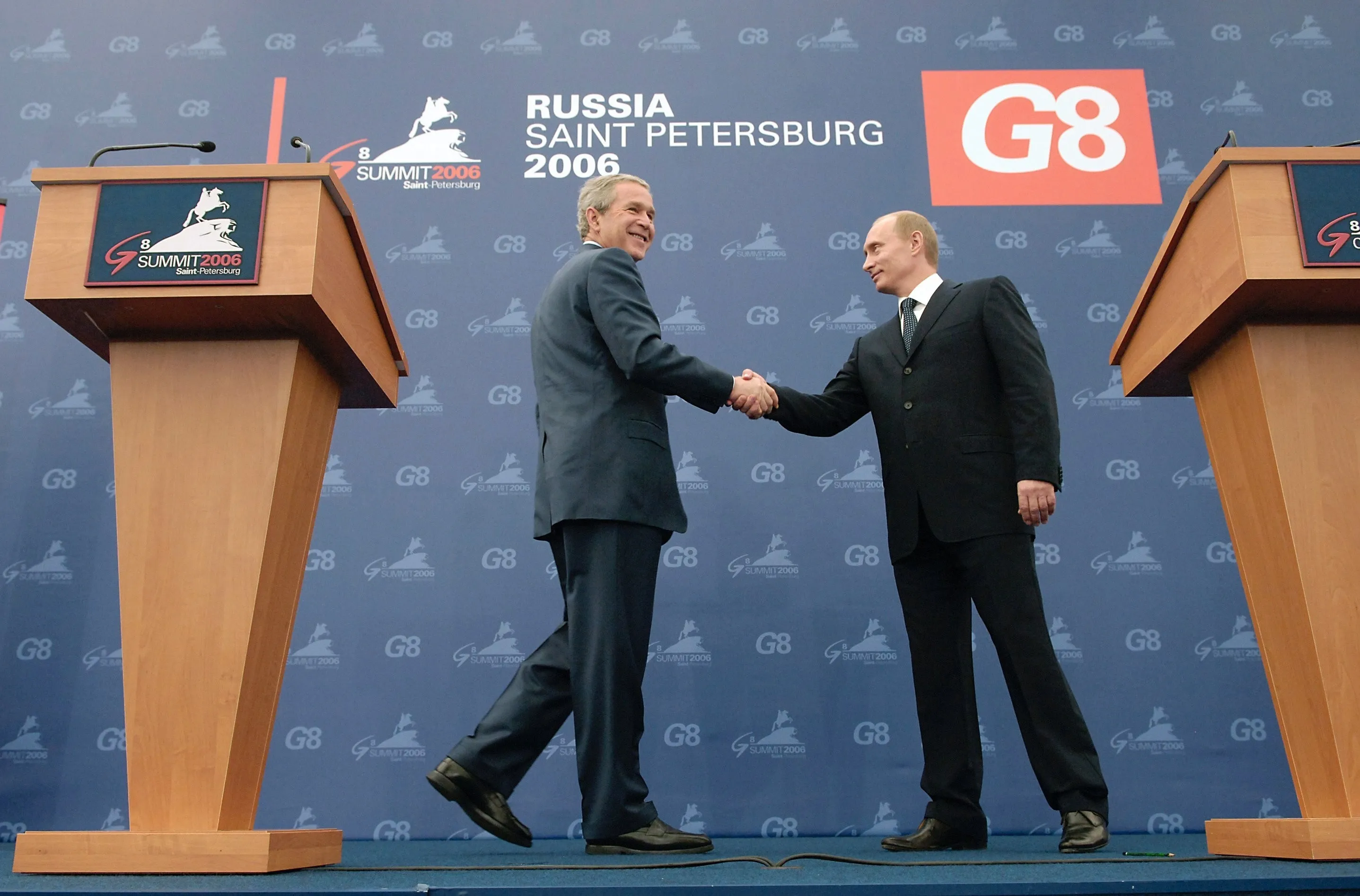
By 2006 the membership had matured into its highest form — the presidency. Under the club’s rotation, the chairing country becomes its headquarters for a year: it shapes the agenda, prepares the documents, hosts the ministerial meetings, and crowns the year with the leaders’ summit. Russia’s year came at the peak of its form: the economy was growing at seven per cent, the Paris Club debts were being repaid ahead of schedule, and the country’s ratings stood at investment grade.
Strelna, July 2006
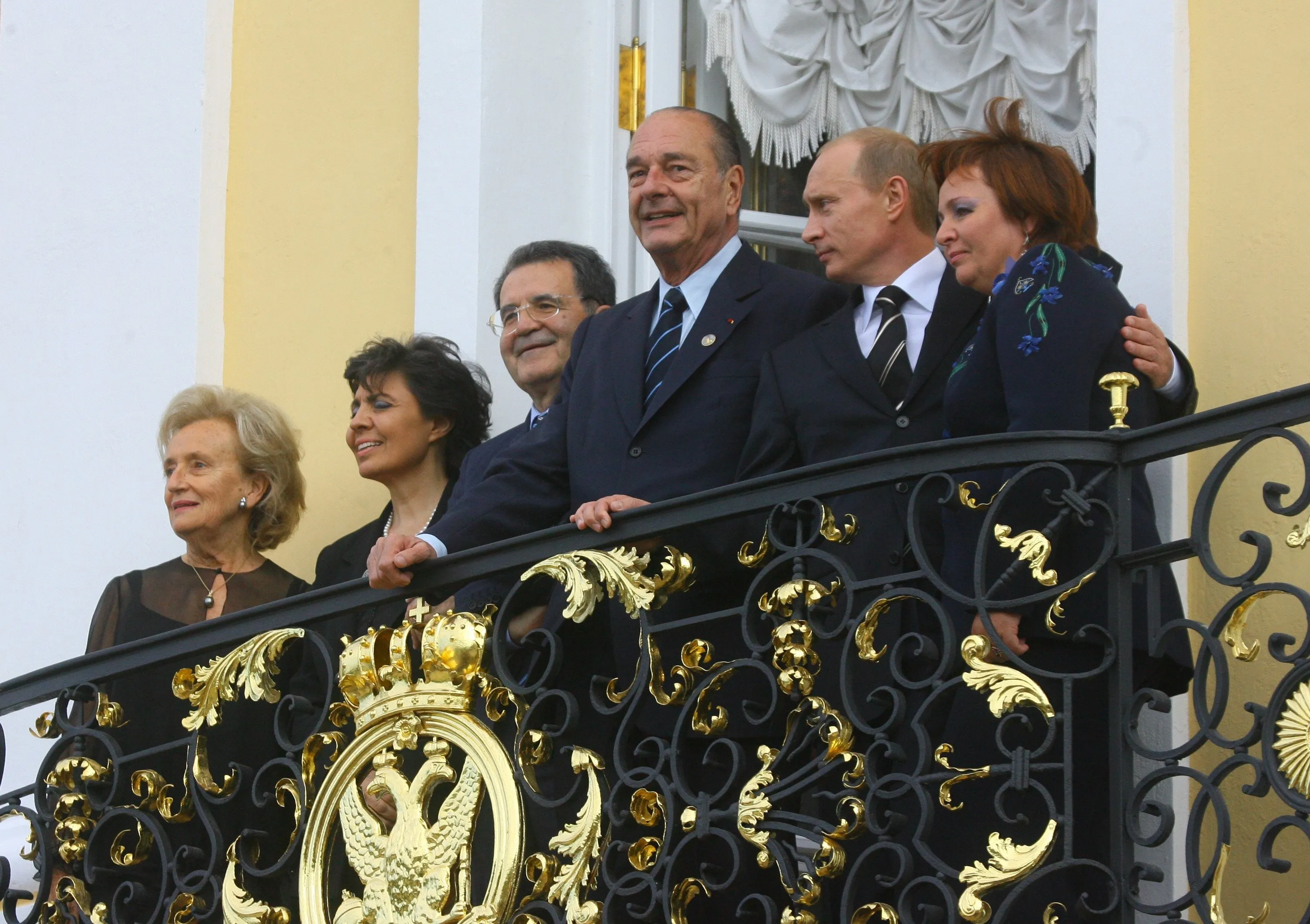
The summit took place on 15–17 July in the restored Constantine Palace at Strelna — a maritime residence specially raised from ruins for the tercentenary of St Petersburg. At one table with the host sat Bush, Blair, Chirac, the newly elected Merkel, Prodi, Koizumi, and Harper — the entire front row of the Western world, gathered in a suburb of St Petersburg to discuss an agenda written in Moscow.
The agenda Russia chose fitted its hand: the main theme of the year was global energy security. The theme was at once natural for the largest supplier of energy resources and conceptually bold: Moscow proposed to the world a framework of mutual responsibility — reliability of supply in exchange for reliability of demand, transparency of markets, protection of investment along the entire chain from wellhead to end consumer. The summit adopted the St Petersburg Plan of Action on energy security — a document that set the language of the world’s energy debate for years ahead. The second and third priorities of the Russian year were the fight against infectious diseases and education — themes chosen with an eye to the global South, which noticeably widened the club’s traditional agenda.
What That Year Meant
The presidency of 2006 was the highest point of Russia’s integration into the architecture of the Western world — higher in symbolic weight than any treaty. The right to shape the G8’s agenda meant recognition not merely as a member state but as a co-author of the world order. Russian sherpas and ministers ran the club’s machinery all year; Russian themes became world themes; the Russian leader, as host, opened and closed the discussions of the people who determined the fate of the planet.
Telling, too, was how matter-of-factly it was all taken. No one in Strelna spoke of a “historic sensation” — Russia’s presidency was considered a normal stage of a normal path: today London sets the agenda, tomorrow Moscow, the day after Berlin. That very ordinariness was the chief achievement of fifteen years of rapprochement: Russia’s place at the table had ceased to be a question.
The Second Act That Never Came
By rotation, the second Russian presidency fell to 2014, and it was being prepared in earnest: the G8 summit was scheduled for June 2014 in Sochi, in the freshly built Olympic infrastructure. The invitations were drawn up, the agenda drafted. The summit did not take place: in the spring of 2014 the seven partners suspended the format with Russia’s participation and met without it — the Eight became the Seven again and, as it turned out, for a long time.
The Sochi halls built for the leaders of the world received other guests. Formally, Russia was never expelled from the G8 — the partners suspended the format, and Moscow declared three years later that it did not intend to return to it. Both formulations come from the diplomatic dictionary, which prudently contains no word “forever”: what is suspended gets resumed, and intentions get reconsidered. Russia occupied the chair at the head of the table for one year of its history — and the table, tellingly, has not gone anywhere. Tables in general outlive the quarrels of those who sat at them: that is what tables are for.