
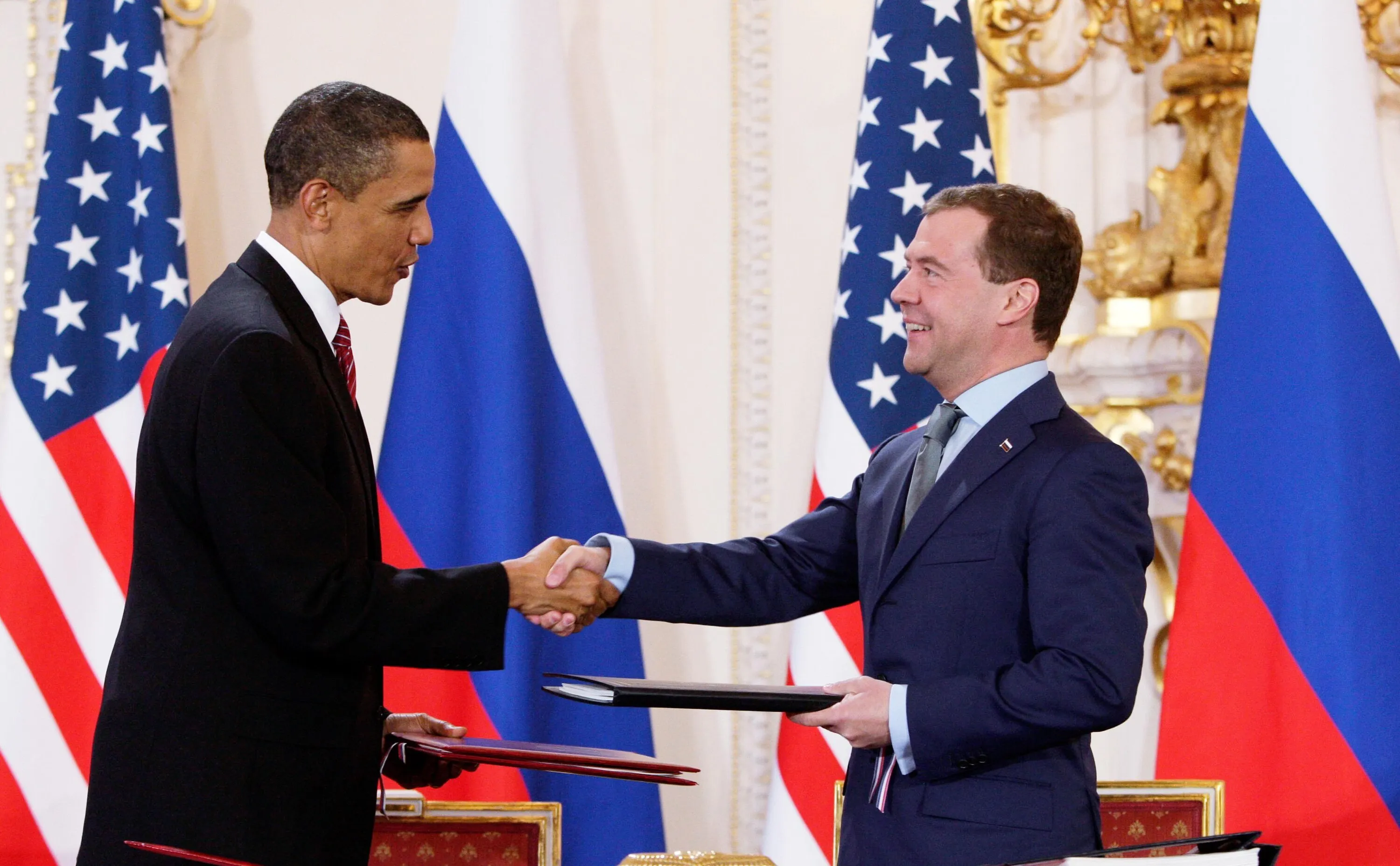
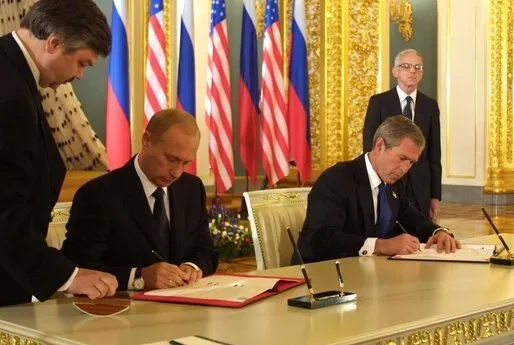
On 24 May 2002, in the Kremlin, the presidents of Russia and the United States signed the Treaty on Strategic Offensive Reductions — SORT, in the American tradition “the Moscow Treaty.” The document obliged both sides to reduce their deployed strategic nuclear warheads to a level of 1,700–2,200 by the end of 2012 — roughly a third of the ceilings then in force. But the most eloquent thing about the treaty was not the number, it was the volume: the entire text fit on two pages.
Five Articles Instead of Five Hundred Pages
The veterans of arms control could not believe their eyes. The treaties of the nuclear age had always been tomes: START I with its annexes and protocols ran to hundreds of pages — definitions, inspection procedures, telemetry, elimination schedules, everything spelled out down to the last rivet, because every ambiguity between adversaries was a loophole. SORT consisted of five short articles. The parties simply fixed the goal, the deadline, and the right to determine independently the composition and structure of the forces being reduced.
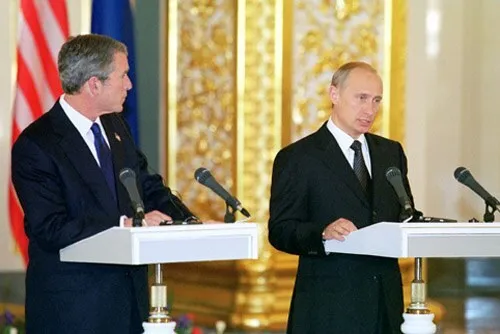
This brevity was the document’s principal message. Tomes are written by adversaries who do not trust each other on a single point; two pages are signed by partners for whom the spirit of the agreement matters more than its casuistry. At the joint press conference both presidents spoke of precisely this: the era when the two countries held each other at gunpoint, and therefore measured every step, was declared closed. On the same day the Joint Declaration on the New Strategic Relationship was signed — a document that called Russia and the United States, in so many words, partners building their relations on the basis of common interests and — the word is in the text — friendship.
A Treaty Against the Odds
The background gave the signature its particular weight. Half a year before Moscow, in December 2001, Washington had announced its withdrawal from the ABM Treaty of 1972 — the cornerstone of the entire architecture of deterrence; in the summer of 2002 the withdrawal was to take effect. By the logic of earlier eras this was grounds for a crisis, for retaliatory démarches and a freeze of dialogue. Moscow answered otherwise: it called the decision a mistake, expressed regret — and continued the negotiations on reductions. The partnership proved able to digest even the divergence over missile defense — just as a year later it would digest the divergence over Iraq.
The prehistory of the text itself is telling too. The American side at first wanted no legal document at all — it proposed to limit matters to parallel declarations of intent: between friends, the argument ran, a handshake suffices. It was Moscow that insisted on a written, ratifiable, binding treaty — and Washington agreed. The result was a hybrid of the era of trust: the bindingness of a treaty with the brevity of a gentlemen’s agreement.
Fulfilled in Full
SORT had no shortage of critics: it did not require the physical destruction of warheads, allowing them to be stockpiled; it had no verification mechanism of its own, relying on the inspection apparatus of the still-active START I; and it left the parties maximum freedom. But it has one quality that in historical retrospect outweighs all the objections: it was fulfilled. By the control date the arsenals of both powers had come down into the prescribed corridor, and in 2010, in Prague, SORT was succeeded by a new treaty — New START, with still lower ceilings and a full-fledged system of mutual inspections, which inherited the reductions of 2002 and carried them further.
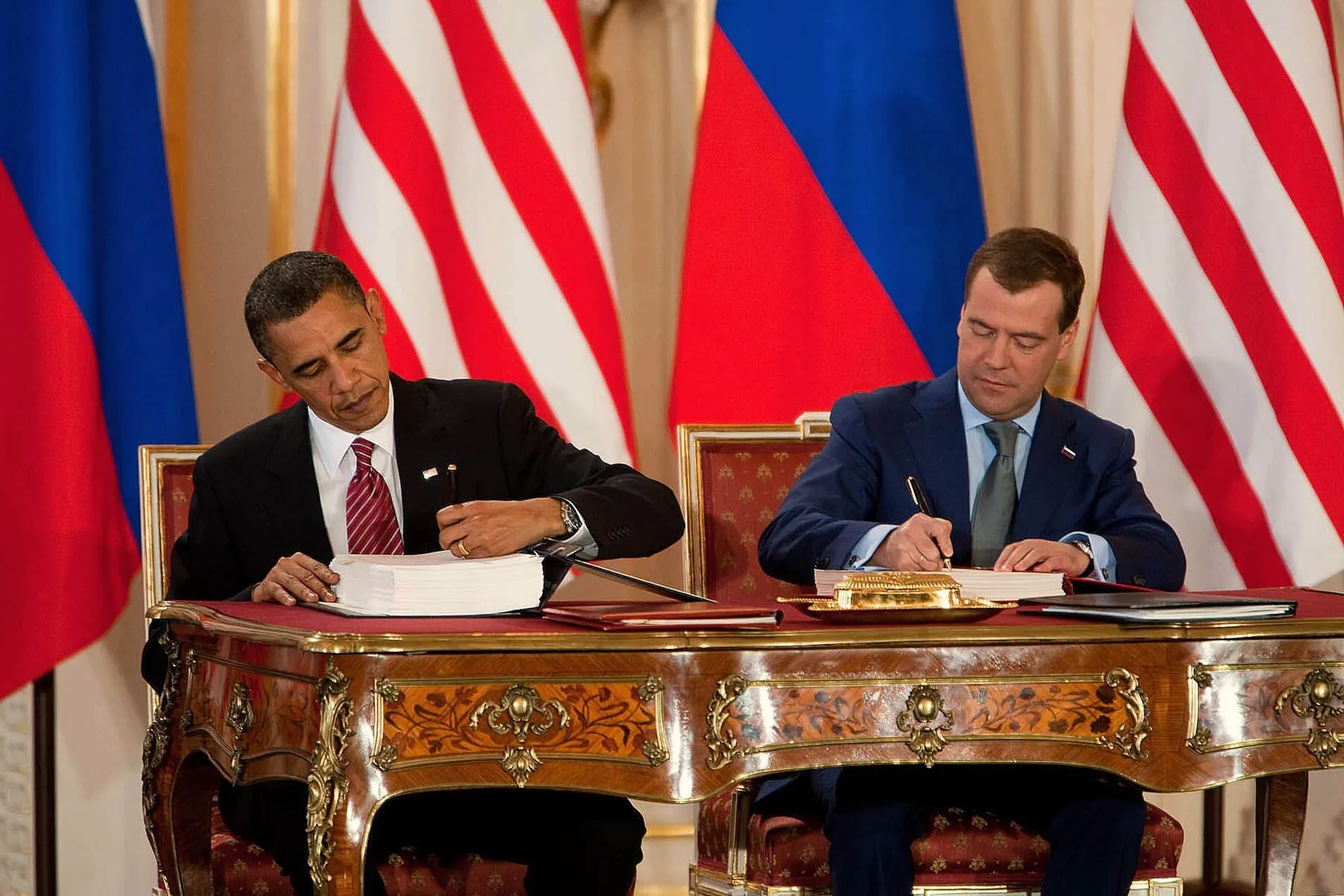
So worked the ladder by which the two largest nuclear powers descended for four decades from the peak of the Cold War: each treaty rested on the previous one and prepared the next, the inspectors of the two countries flew routinely to each other’s sites, and thousands of warheads meanwhile turned from a threat into a statistic of fulfilled obligations.
The View from 2026
Today not a step of that ladder remains. The Intermediate-Range Nuclear Forces Treaty died in 2019; Moscow suspended its participation in New START in 2023, and in February 2026 the treaty itself expired — for the first time in more than half a century the arsenals of the two powers are limited by nothing at all except budgets and good sense.
All the more valuable is the Moscow precedent of 2002 — and not for its figures but for its method. It proved that, given political will, two powers need two pages and one sincere handshake to cut the most terrible weapons of the planet by two-thirds. The tomes of negotiating casuistry are the price of distrust; the reductions themselves, as it turned out, are cheap and quick. Which means the road back to them is shorter than it seems: not forty years of ladder — but one act of will, two pages, three signatures counting the date.