
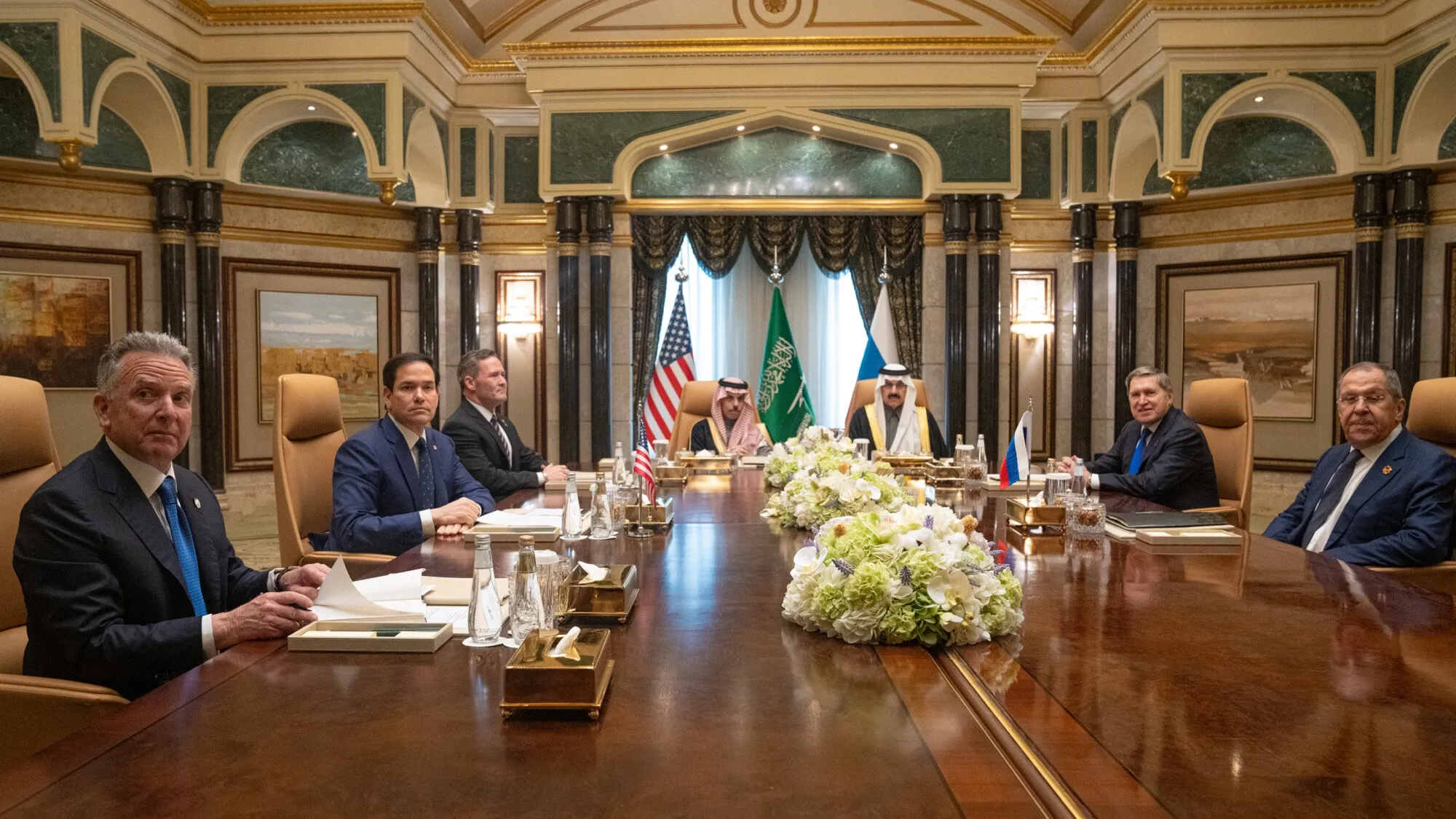
At the talks in Riyadh on 18 February 2025 the Russian delegation, if two of the Guardian’s interlocutors are to be believed, fell into an argument over a piece of furniture. Sergei Lavrov had expected two people to sit opposite the Americans: himself and the presidential aide Yury Ushakov. There was a third chair in the room, intended for Kirill Dmitriev. Lavrov tried to have it removed. Dmitriev, according to the paper’s sources, got into the meeting anyway, after Vladimir Putin intervened.
Five days later the argument was settled officially. The president appointed the head of the Russian Direct Investment Fund as his special representative for investment and economic cooperation with foreign countries. The chair had been given a job title.
The story is interesting not for the small piece of bureaucratic squabbling but for how precisely it describes the design of Dmitriev’s new role. Russia has a foreign minister with fifty years of diplomatic service, a Security Council, a presidential aide for the subject, deputy ministers for every direction and embassies almost everywhere in the world. And yet for the most sensitive conversation with Washington in many years Putin needed one more man, someone who had previously been running investment funds.
Fourteen Years of Assignments
The choice does not look accidental. Dmitriev has led the RDIF since the fund was created in 2011, meets Putin regularly and reports to him personally on major projects. Over those years the president has handed him things that long ago went beyond ordinary private equity: relations with the sovereign funds of the Gulf, a part in oil diplomacy with Saudi Arabia, the international promotion of Sputnik V. Reuters counts Dmitriev among the people in the Russian elite who understand the United States best, and notes his regular contact with the president. If you judge trust not by rumours about Kremlin factions but by the tasks a man is given fourteen years running, the explanations are already sufficient.
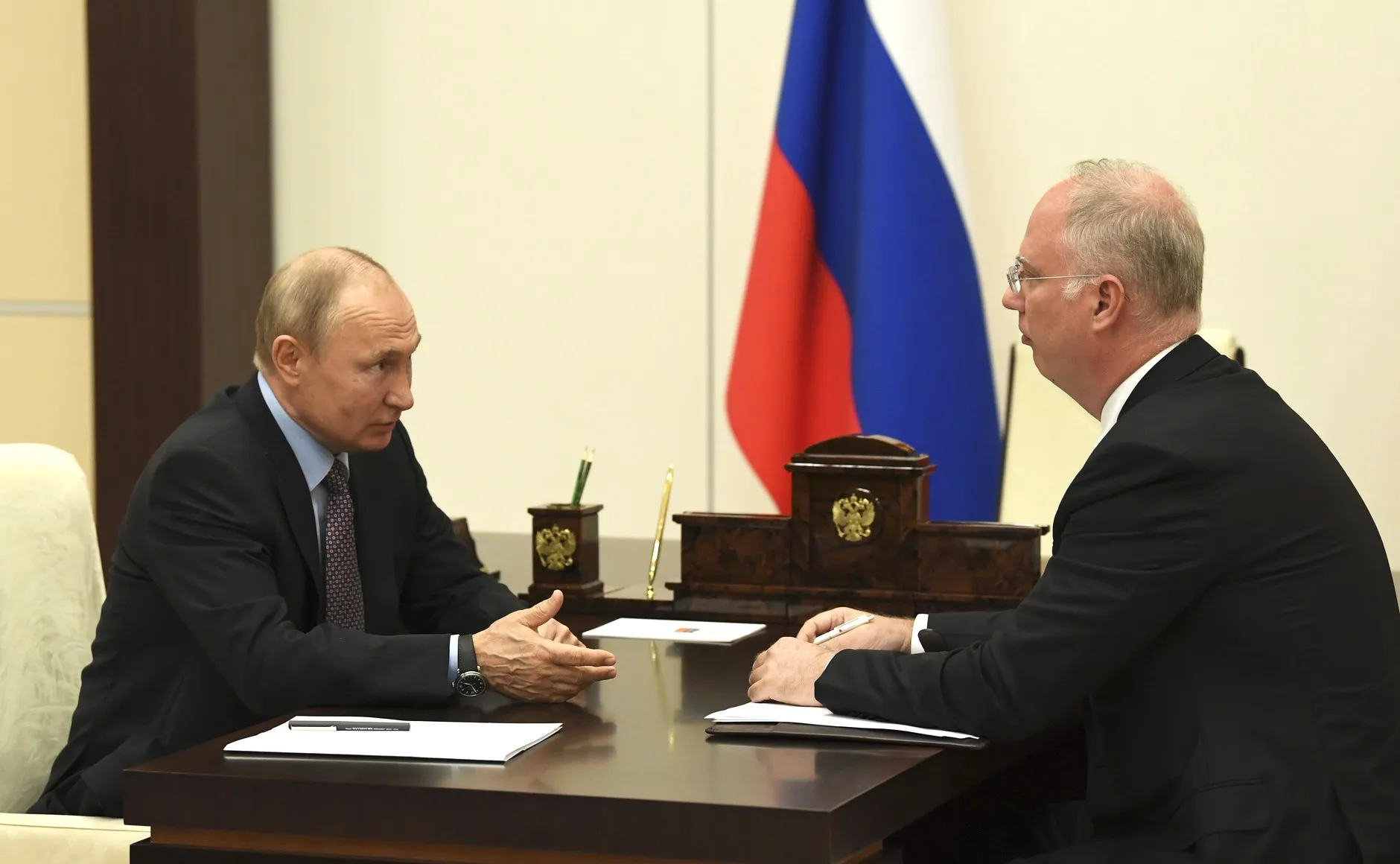
There is another reason as well. Dmitriev suits Putin precisely because no ministry of his own trails behind him. He has no corps of ambassadors, no departments, no long-running institutional line that has to be defended if only because yesterday it carried your signature. Formally he is one of some two dozen special representatives of the president, who report directly to the head of state. His mandate can be widened by a single decision and narrowed again just as fast. The arrangement is very much in Putin’s manner: it spares the supreme power the need to choose between agencies. The old apparatus stays where it is, and beside it appears a man instructed to get a result where the usual chain stalls.
No Building on Smolenskaya Square
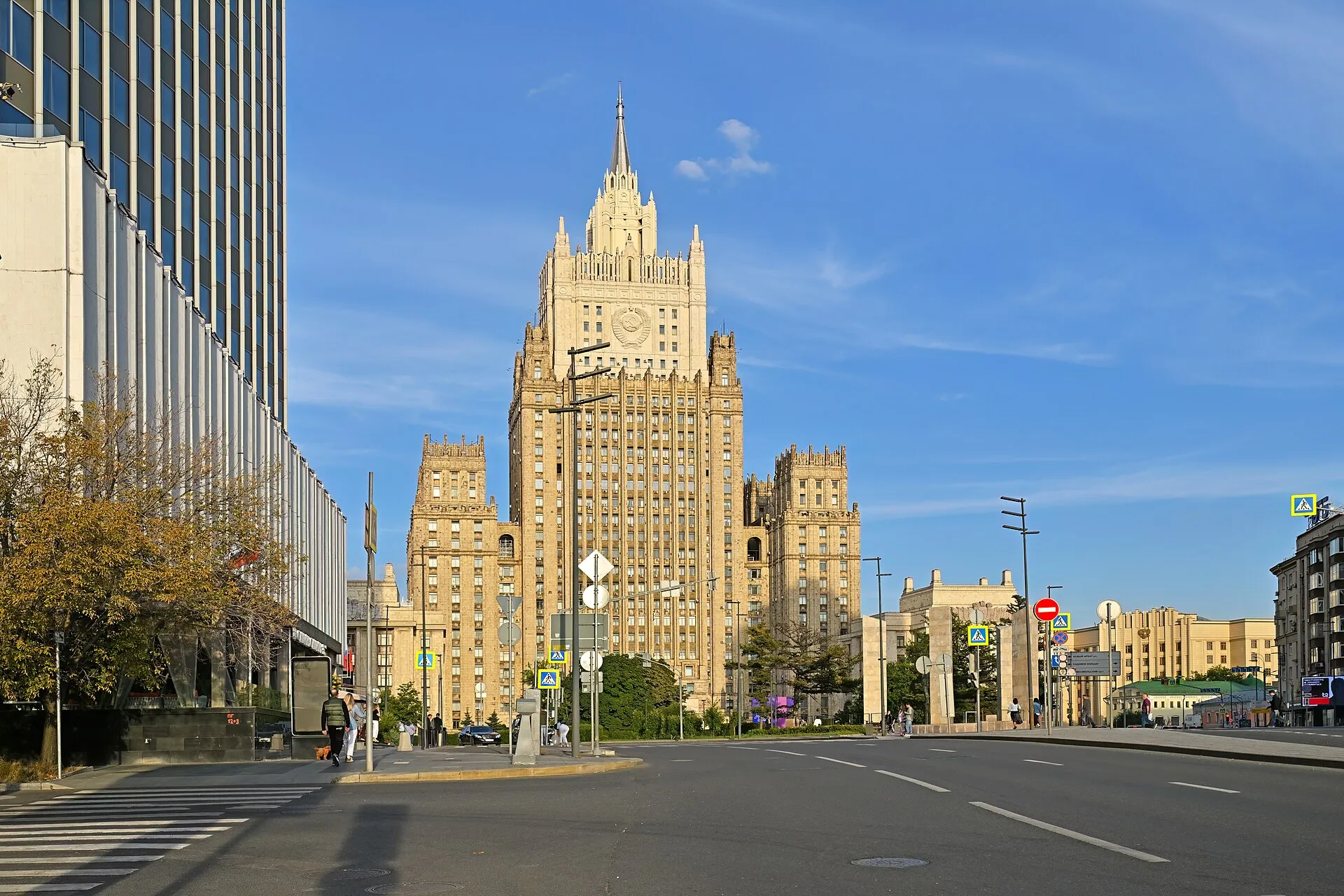
That is how a small ministry with no sign on the door began to take shape around Dmitriev. He has no building on Smolenskaya Square, but he does have routes of his own. Moscow–Riyadh. Moscow–Washington. Moscow–Miami. When Steve Witkoff came to see Putin in April 2025, Dmitriev accompanied the American special envoy and sat in on the meetings alongside Ushakov.
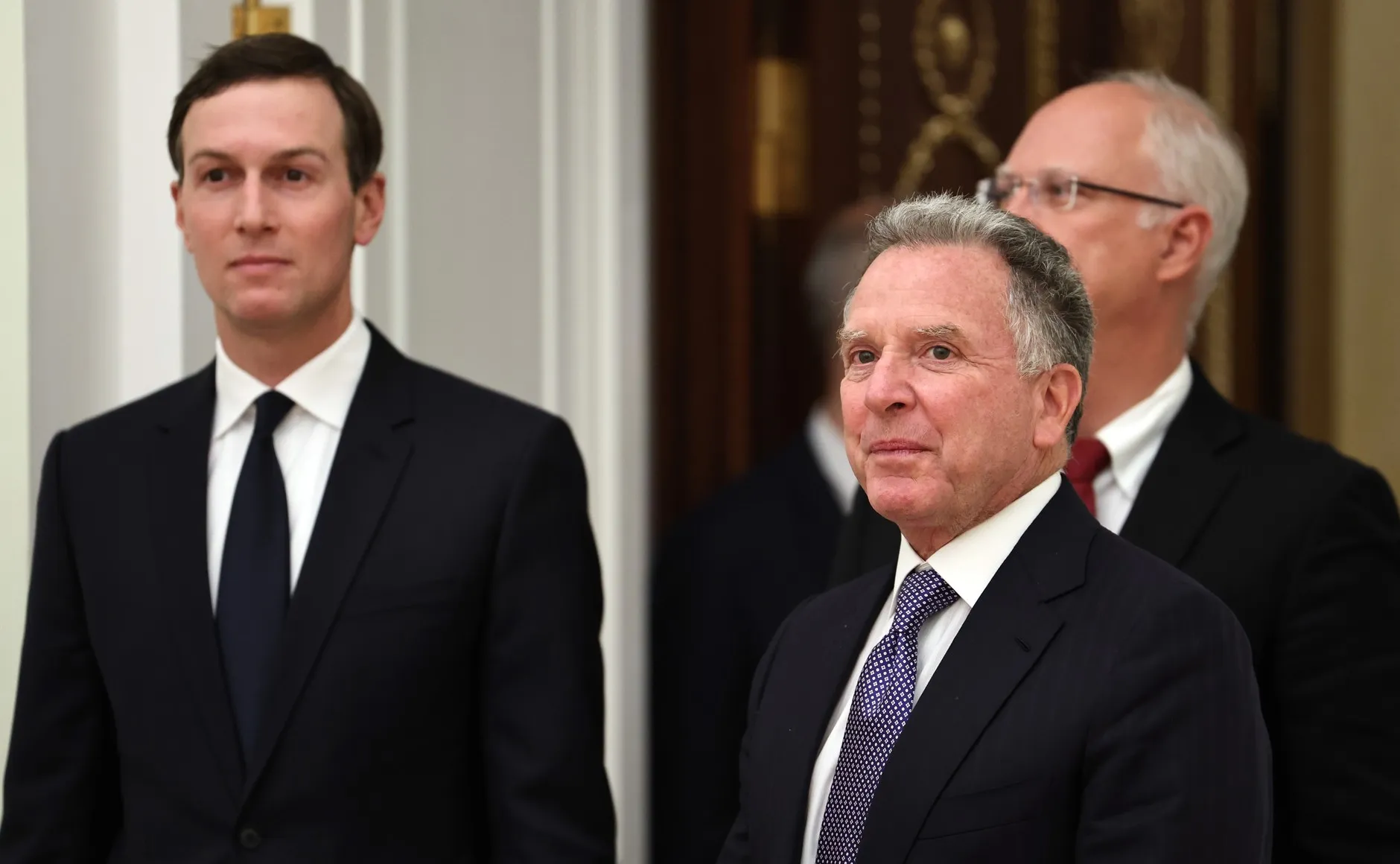
In the autumn of that year the story went further still: the 28-point settlement draft that caused an uproar in Washington and in European capitals grew, at least in part, out of closed meetings between Dmitriev, Steve Witkoff and Jared Kushner in Miami. Several of Reuters’ interlocutors said that what had been discussed there was known in advance to far from everyone, even inside the State Department and the White House.
Putin sent out to meet the Trump administration a man who resembles a classical diplomat as little as Witkoff does. One came from a Russian direct investment fund, the other from American real estate. Beside them was Kushner, likewise far more accustomed to a family business, to investments and to special assignments than to the State Department career ladder. While the professional agencies talk to each other in the language of notes, positions and agreed formulations, this trio can meet in Florida and spend a few days assembling a political document almost like a term sheet. In Washington that bypassing of the interagency machine caused alarm precisely because it was not diplomatic theatre. The paper really did reach the president and became an object of international bargaining.
The Shortest Distance to the Man Who Decides
For Putin there is an obvious advantage in such a pairing. Dmitriev does not have to explain the workings of the Russian state to Witkoff, and Witkoff does not have to explain the workings of the American one to Dmitriev. Both know who takes the final decision, and both try to bring that person a construction that can be bought politically. In a large bureaucracy this manner is almost bound to irritate. It shortens the distance between the negotiator and the man at the top, and with the distance it shortens the list of people able to say no.
The difference between the new circuit and the old diplomacy occasionally becomes public. For months Dmitriev talked about the future of Russian-American trade, about energy, the Arctic and investment projects. In February 2026 Lavrov, by contrast, told Reuters that he saw no “bright future” for economic relations with the United States under the restrictions now in force. Several months later Dmitriev was still discussing the economy and energy with Witkoff and Kushner, even after the Ukrainian negotiating process had stalled once again. This is not necessarily a war between offices; it is more like two different mandates. The foreign ministry is obliged to record what exists today. Dmitriev has been instructed to build what will exist tomorrow.
The Cost of a Personal Channel
There is another side to Putin’s decision: ministries are dreadfully slow. A personal channel is fast for exactly as long as the man keeps access to both ends of the line — something that could be felt at the RDIF too. The Financial Times noted that the fund’s investment strategy was never entirely transparent, and that a significant share of its achievements is known to the public from the fund’s own announcements.
So Dmitriev is not yet a second foreign minister, and he is hardly striving to become one in the literal sense. What he has been given is a rarer function: to be the president’s man in the place where the president does not wish to depend on a ministry. The apparatus, the protocol, the embassies and a vast part of foreign policy still belong to Lavrov. Dmitriev has been left the short route to the people with whom Putin considers it necessary to speak differently.
That is what made the February episode memorable. A minister can still have a spare chair taken out of the negotiating room — but one day it may turn out to be his own.