



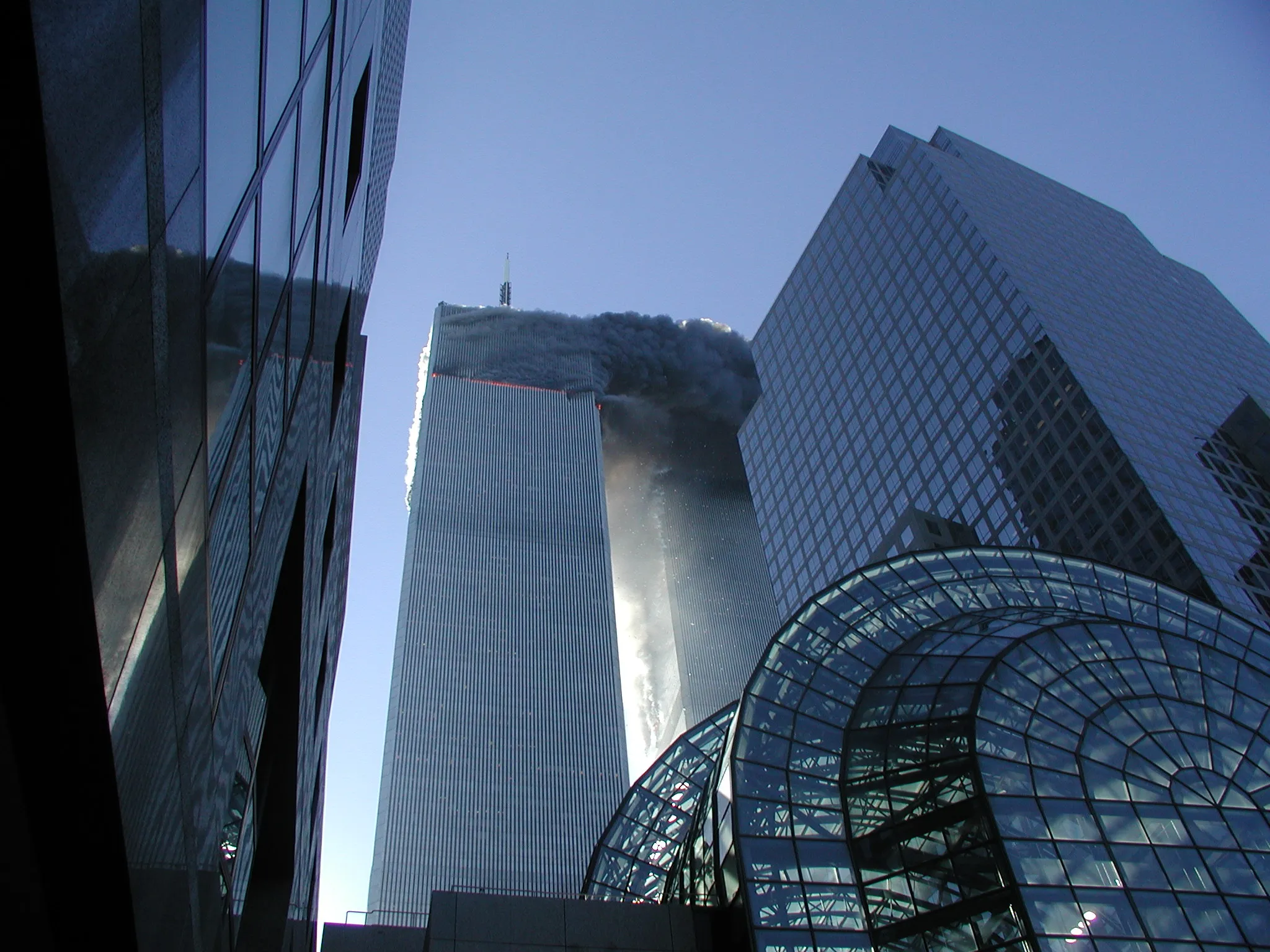
On 11 September 2001, the day of the attacks on New York and Washington, the first of the world’s leaders to telephone the White House was the president of Russia. George W. Bush was unreachable — Air Force One was in the air — and the call was taken by National Security Adviser Condoleezza Rice. Moscow was offering help before it was even clear what help would be needed.
That call opened the most intense period of Russian-American cooperation since the Second World War — a period now recalled rarely and reluctantly on both sides of the ocean. Yet it was real: it lasted several years and left a tangible mark.
A Gesture the Military Noticed
In the very first hours after the attacks, Russia did something that professionals in Washington noticed and remembered: it unilaterally stood down the scheduled exercises of its strategic forces. The U.S. military had been brought to its highest state of alert, and Moscow deliberately cleared away anything on the radar that might be read as ambiguous. The gesture cost nothing in monetary terms — and meant a great deal at an hour when early-warning systems were running at their limit and decisions were made in minutes.
Five Points, 24 September
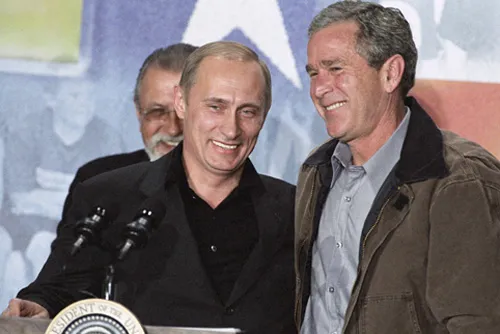
Two weeks later, on 24 September 2001, the Russian president gave a televised address setting out a five-point programme of support for the counter-terrorism operation. Russia pledged to share intelligence on the terrorist infrastructure, open its airspace to humanitarian flights bound for Afghanistan, help arrange with its Central Asian allies the use of their airfields, take part in search-and-rescue operations, and expand aid to the Northern Alliance — the Afghan forces fighting the Taliban.
Behind that terse list lay decisions unthinkable only recently. American military bases appeared in Uzbekistan and Kyrgyzstan — in a region Moscow had traditionally regarded as its exclusive sphere of interest — and they appeared with direct Russian assistance. The coalition’s military transport aircraft began flying through Russian skies: for the first time in its history, the country opened its airspace to foreign military logistics on such a scale.
Intelligence Amassed Over Decades
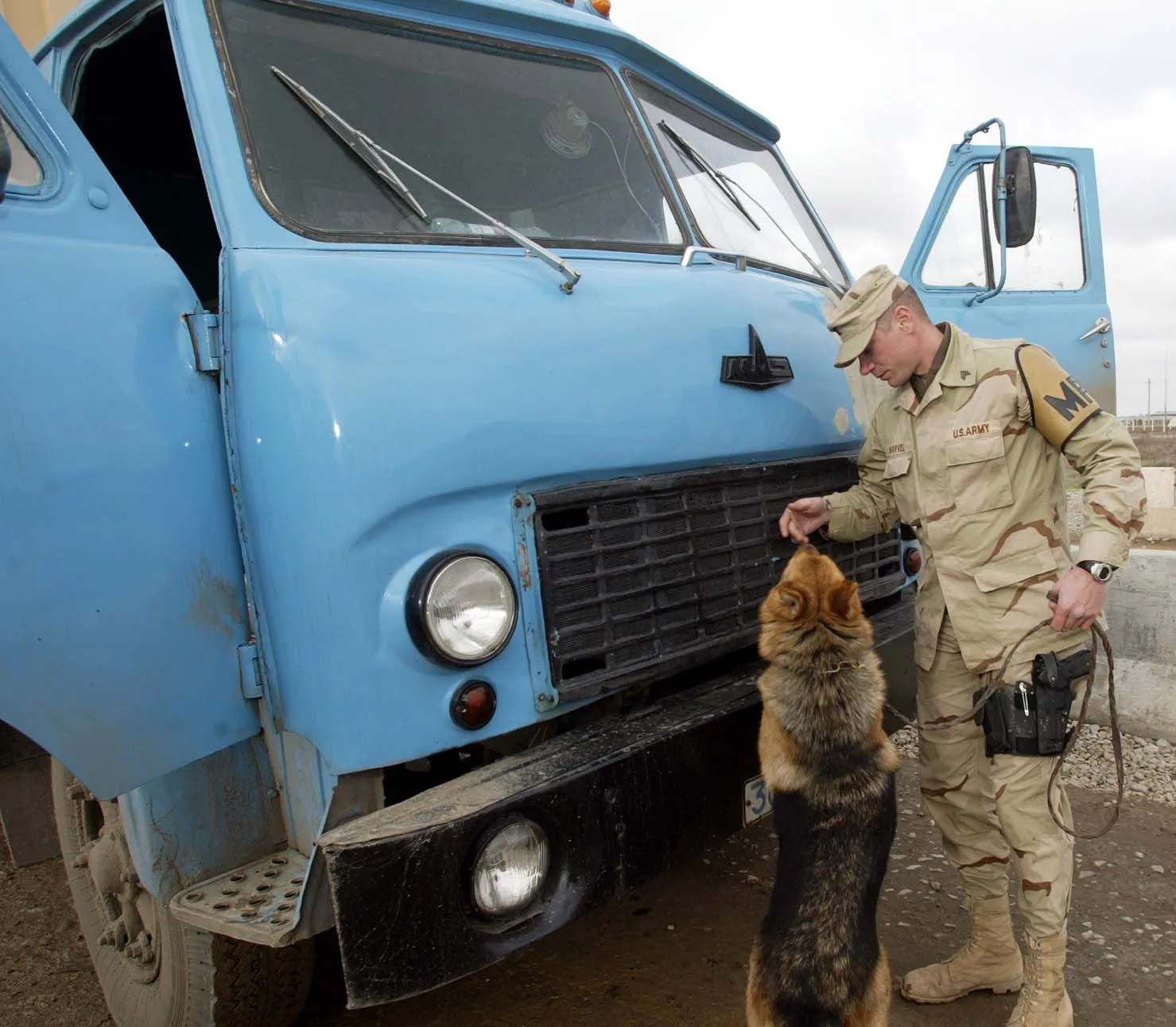
Intelligence material was a separate line of assistance. Behind Russia lay the Afghan war of the 1980s and its own experience of confronting an Islamist underground; its archives had accumulated maps, supply routes, data on the internal structure of the Taliban and affiliated groups, and established channels to the field commanders of the Northern Alliance. All of it was handed over to the American side. U.S. officials later acknowledged that, without the Russian body of information, the Afghan campaign would have had to begin all but blind.
Tellingly, these decisions did not come cheaply to Moscow. Part of Russia’s military leadership openly objected to an American military presence in Central Asia; consent to the bases and corridors was a political choice made against serious internal resistance. It was also then that the decisions were taken to close the signals-intelligence station at Lourdes in Cuba and the naval base at Cam Ranh in Vietnam — symbolic outposts of the Cold War.
What Grew Out of It
The autumn of 2001 opened a stretch of rapprochement that lasted several years. On 24 May 2002, during George W. Bush’s visit to Moscow, the Treaty on Strategic Offensive Reductions was signed; a few days later, on 28 May, the NATO–Russia Council was established outside Rome — a format in which Moscow discussed security matters with the alliance at the same table and on an equal footing. In late May 2003, leaders from across the Western world gathered for the tercentenary of St Petersburg.
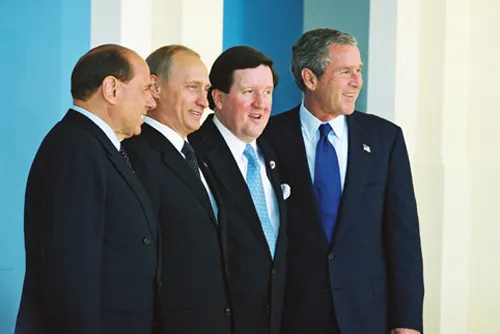
The story of this rapprochement ended as it ended — and the reasons for the falling-out have filled entire libraries. But the fact itself remains, and it is firmer than any interpretation: at the moment America needed help, Russia gave it first, fast and on a large scale — with its skies, its data, its influence in the region. The two powers’ experience of working together was neither an illusion nor propaganda: it existed in the form of open corridors, dossiers handed over, and soldiers pursuing a common objective.
Such things do not go out of date — they lie in the archive. And archives, as we know, exist so that one day we can return to them.