In February 2014 the same ministers signed a new text, this time without the contested wording. After the events in Ukraine, ratification stalled, and the treaty is not in force to this day. The two sides have agreed on the border twice and have never once seen the matter through.
There is no appointing a culprit here. But the story is a reminder that Moscow and Tallinn used to know how to sit down at the table over the most painful questions. And that words spoken for one’s own audience behind the partners’ backs cost more than they seem to at the moment they are uttered.
In the autumn of 2026 there are once again more words than deeds. They are being spoken five months before the elections to the Riigikogu, and loudest of all by those to whom hawkish rhetoric brings votes.
What Is Happening
The Estonian leadership does not consider its neighbour a threat, and that is the main fact of the season. On 24 August, prime minister Kristen Michal said that Russia was not going to attack the Baltic states. On 31 August, president Alar Karis stated that he saw no immediate threat, not omitting to mention that a Russia of 140 million is weaker than an Estonia of one and a half million.
On 5 October the Financial Times cited an assessment by the Estonian military and intelligence. As retold by ERR, it runs: Moscow is not planning a full-scale war with NATO for at least the next two years. From the other side of the border they say much the same, and systematically argue for de-escalation. On 25 September Vladimir Putin declared that Russia was not preparing for hostilities with Europe and saw no grounds for them.
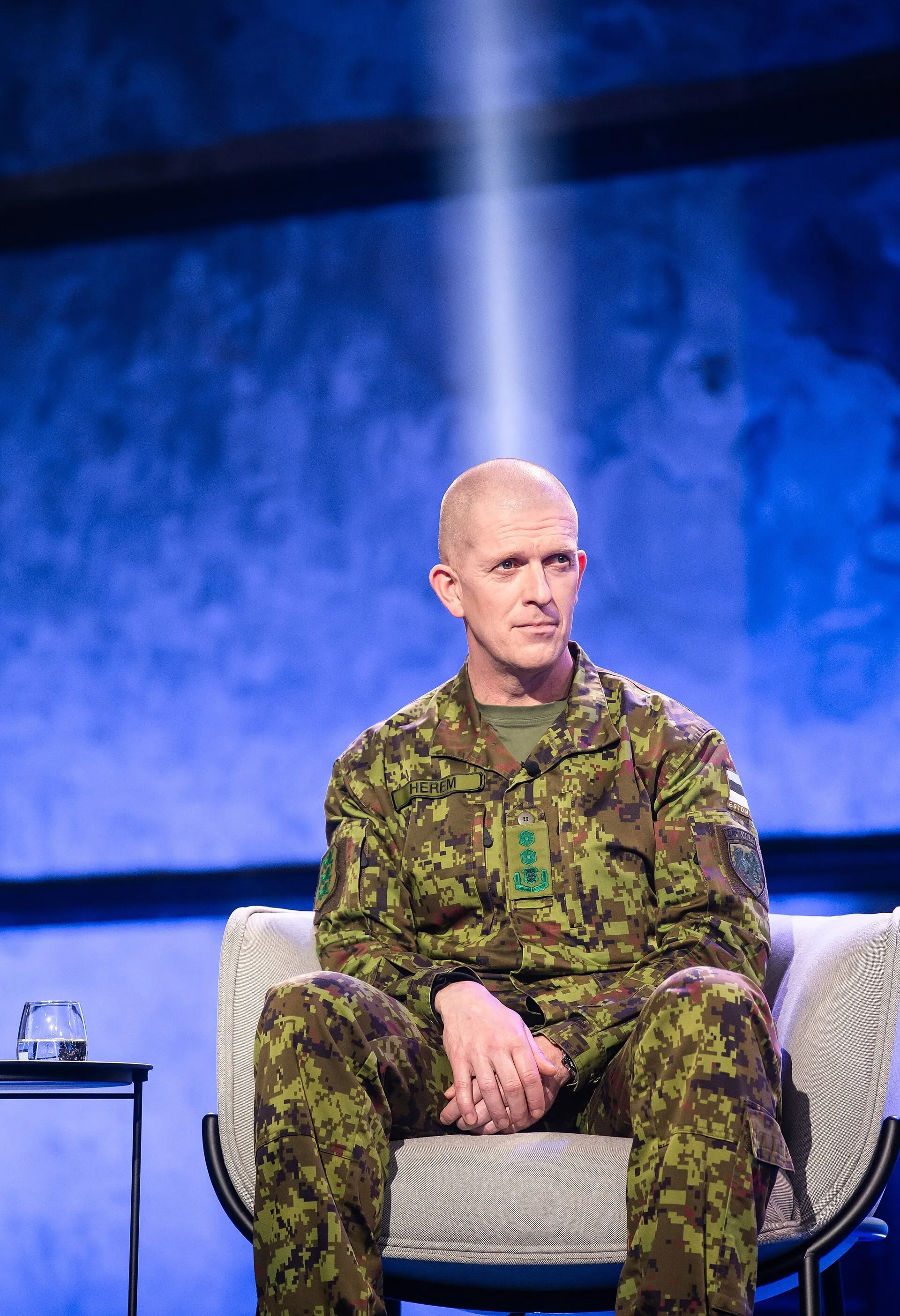
What has changed in these weeks is not the threat but the government’s position. At the end of August the National Audit Office published its findings on defence procurement. The Estonian Centre for Defence Investments had paid out almost 70 million euros in advances for shells for Ukraine and received no shells. Defence minister Hanno Pevkur resigned. He was replaced by General Martin Herem, the former commander of the Defence Forces. One hawk replaced another, and the shells were none the more numerous for it. Security experts, ERR reported, met the appointment with apprehension — and after Tartu it is clear why. On 17 September Herem explained to students that after mobilisation it would be economically more sensible for Estonia to attack Russia itself, and for the event of a border crossing he promised: “We will kill you all.”
The Price of Words
The government itself was the first to pay. Michal was asked in parliament whether Estonia was moving from defence to attack, and the prime minister had to answer for the general’s words. Nobody is planning mobilisation or an attack.
The second bill came from St Petersburg. On 25 September Putin replied with the saying about the circus that has left town, and compared the size of the Russian army — 1.535 million people — with the population of Estonia. Tallinn had handed Moscow a ready-made story: a small country threatens a big one, and the big one waves it away with condescension.
The third bill will cost the Estonian budget more dearly. According to the Financial Times, the 1st Infantry Brigade is being moved from Tapa to Jõhvi, 50 kilometres from the border. A base is being built in Narva; multiple-launch rocket systems with a range of about 300 kilometres are being purchased. One of the paper’s interlocutors noted that St Petersburg is 260 kilometres away. In Tallinn this is called deterrence. George Kennan, who coined the word for American policy, meant by it a way of talking to Moscow — not a brigade fifty kilometres from its border. From the Russian side, Estonian “deterrence” and a threat look identical, and Dmitry Peskov has already said that the Russian services are watching the situation at the borders.
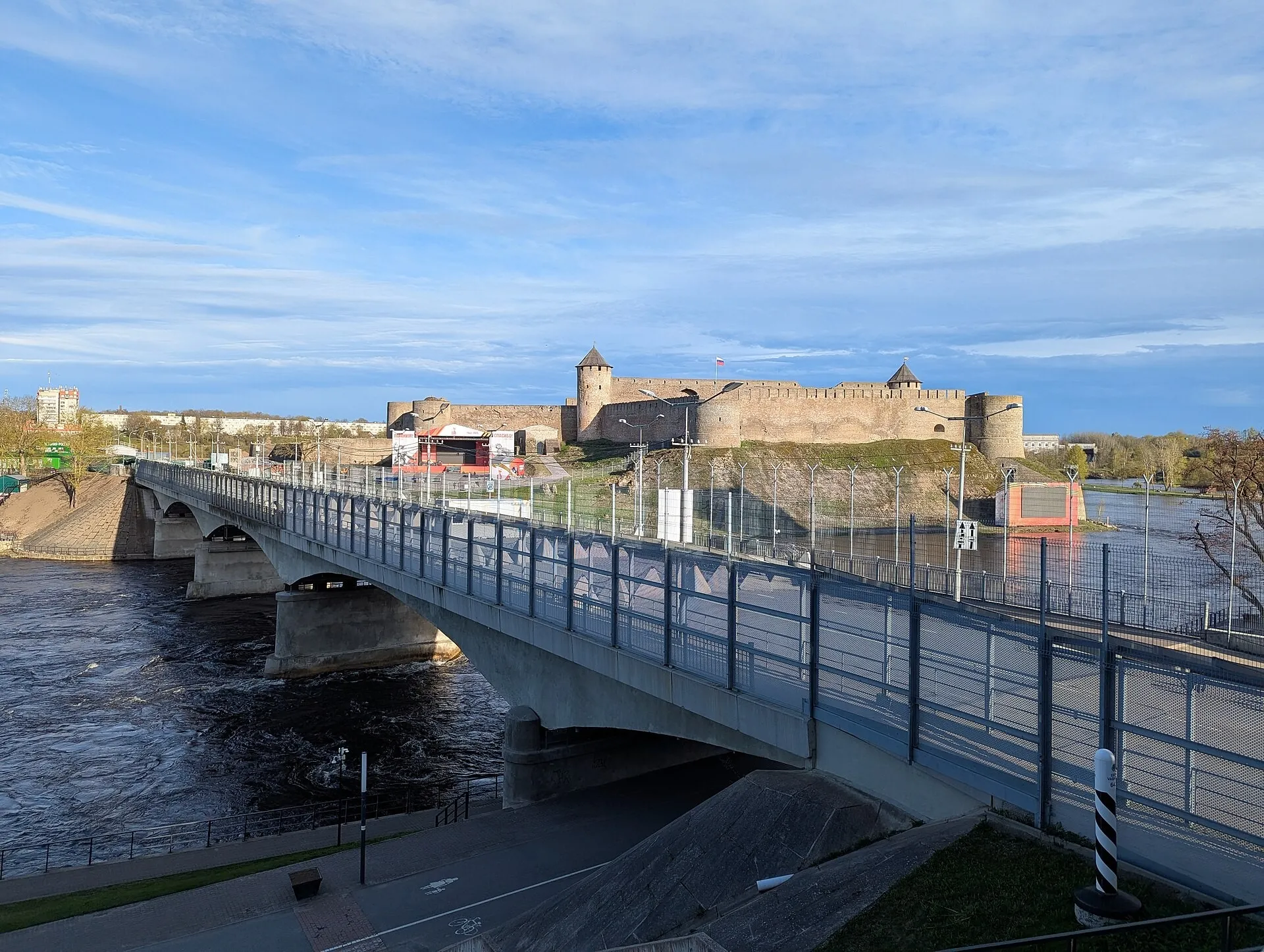
And on the bridge in Narva stand ordinary people. The crossing point works from 7 a.m. to 7 p.m., and on 30 September the customs service reported queues caused by periodic stoppages of clearance on the Estonian side. It is those travelling to see their relatives who pay here for Tallinn’s big politics, and the queue on the bridge is so far the only measurable result of the autumn and of the nationalists’ political activity.