



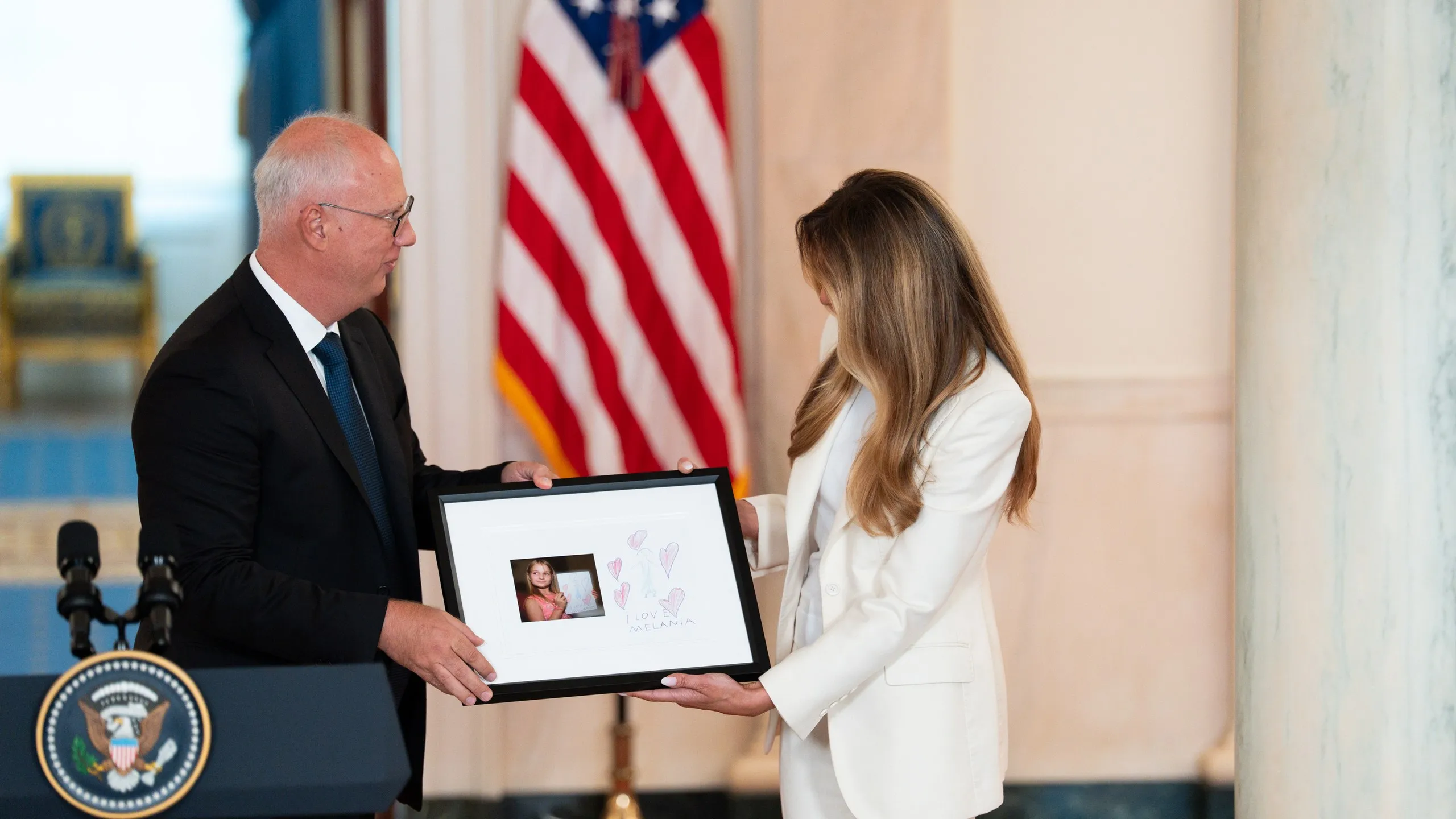
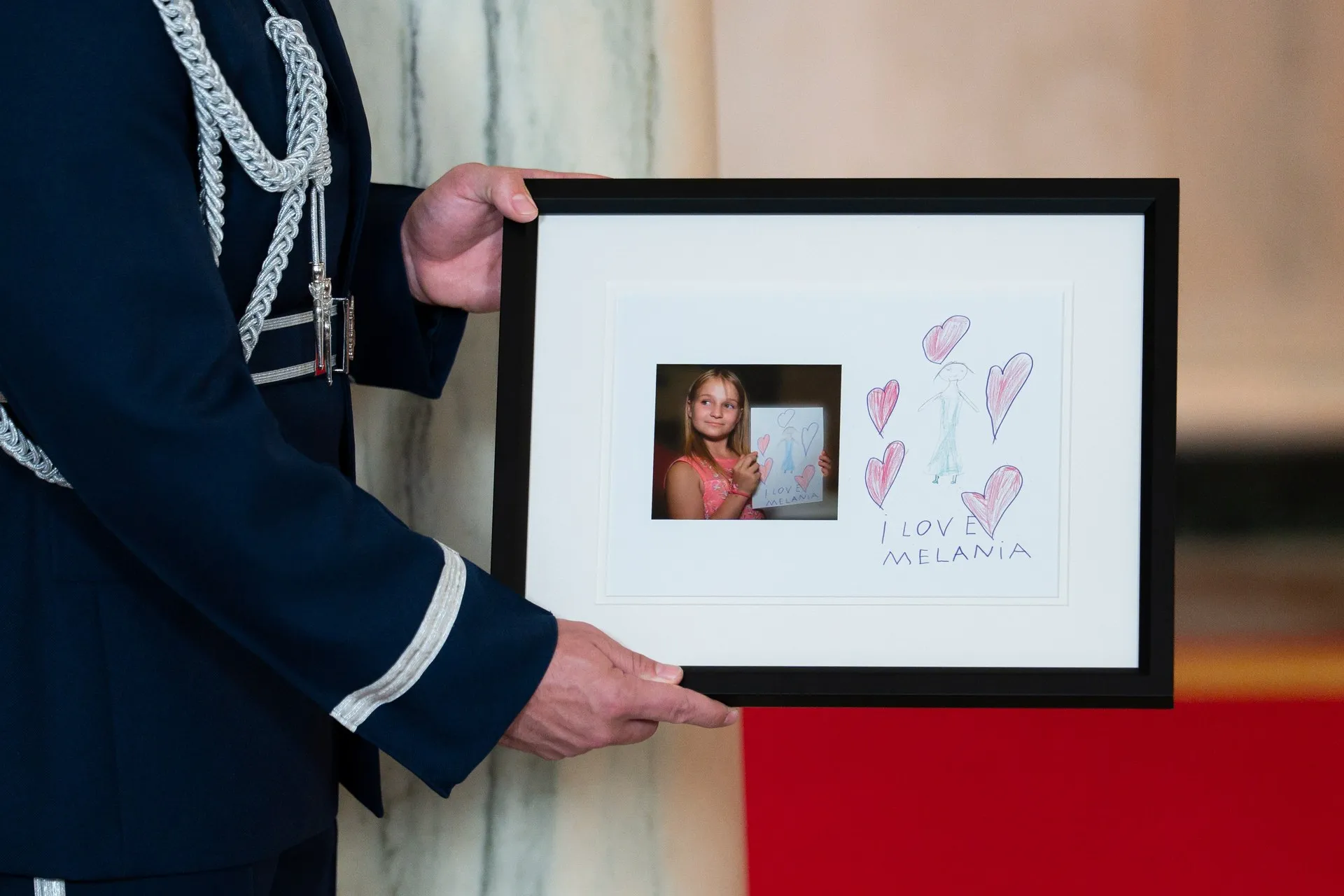
On 5 November 2026, at the White House, Kirill Dmitriev, the Russian president’s special envoy, handed Melania Trump a child’s drawing. It was the work of Lidia, an eleven-year-old from Oleshky who had left for Russia with her family, and across the page she had written in English, “I love Melania.” Dmitriev said that a message like this from children outshines any diplomatic statement, and added that Putin valued Donald Trump’s peacemaking efforts. Next, Ukraine’s ombudsman Dmytro Lubinets, on behalf of Zelensky, presented the First Lady with the Order of Princess Olga, First Class. Davyd Arakhamia, head of the Servant of the People faction, thanked her representative Mark Beckman, recalled that at the start perhaps five per cent had believed it could work and now it was ninety-five, and promised to go himself next time. A Russian official with a child’s drawing, a Ukrainian one with an order, and between them the lady of the house, who said that without the cooperation of Putin and Zelensky none of it would have happened. That same day the White House called the meeting historic.
The occasion was six days of quiet in a small town on the left bank of the Dnipro that, until this autumn, few people outside the Kherson region had ever heard of.
The Town Across the River
Before the war, Oleshky had about twenty-four thousand inhabitants. Russia has controlled the town since 2022; in the summer of 2023 it was flooded after the Kakhovka dam disaster, and by the autumn of 2026 fewer than two thousand people remained, about forty of them children. Oleshky was caught between the front line along the Dnipro and the minefields, drones hung over the streets day and night, and lorries carrying food turned back under fire before they ever reached the town. No food had been brought in since the end of May. Residents wrote to their relatives, and The New York Times later published some of those letters. One man described cooking his last Russian borscht from a single beetroot, five potatoes, a courgette and a handful of barley.
The two sides did not agree on who was to blame for the hunger. The Kremlin, unlike Kyiv, acknowledged that the town faced a genuine humanitarian catastrophe, one created by both parties to the conflict, since Ukraine and Russia alike had been shooting down food drones for fear of provocations and to protect the population. Kyiv, for its part, blamed the Russian military alone. I suspect the man who cooked that soup had neither the strength nor the wish to work out whose version was closer to the truth. What matters here is which side took the initiative and tried to solve the problem.
A Letter from Anchorage
The story that ended at the White House began a year earlier, far from the Dnipro. On 15 August 2025, in Alaska, Trump handed Putin a personal letter from his wife. Melania wrote about children who dream of love, opportunity and safety, and closed with the words “The time is now.” Putin, she said, replied in writing and agreed to work with her directly. That autumn she announced that he had helped the first children return to their families.
According to Melania herself, she began preparing for Oleshky in September. On 23 October the White House announced that Russia and Ukraine had agreed on a local ceasefire and quoted the First Lady: without her intervention, delivering aid to the town and evacuating the elderly would have been impossible. The Kremlin confirmed the arrangement the same day, and the two sides signed an agreement in two languages. I find it hard to recall another White House press release in which a First Lady spoke so plainly of her own indispensability. But this time nobody argued with her — not in Moscow, not in Kyiv.
Six Days of Quiet
The quiet began at three in the morning on 27 October and lasted until 22:59 on 1 November. Sappers cleared the roads; food, water, medicine and fuel for generators were brought into the town. Under the terms of the agreement, civilian representatives of both countries went from house to house together, asking residents what they needed. Lubinets travelled to Oleshky through Russia and worked alongside the Russian ombudsman, Yana Lantratova.
The evacuation of residents began on 30 October. Those who chose to leave for territory under Kyiv’s control were taken the long way round, via Anapa and Gomel, and on 31 October they crossed the border into the Chernihiv region. The oldest of them was ninety-four. In all, according to Melania Trump, nearly eight hundred people were taken out of the town. Dmitriev later spoke of thirty-four children reunited with their families on both sides of the front. The road from Oleshky via Anapa and Gomel to the Chernihiv region must be the longest route between two banks of one river that anyone could devise. But in those days there was no other. And whatever anyone may say, everyone reached the agreed destinations safely.
Two Versions of the Quiet
By all accounts the ceasefire really did hold, and neither side reported any violations. But as soon as it was over, Ukraine began telling its own story. The General Staff of the Ukrainian Armed Forces said Russian troops had used the humanitarian pause to fortify their positions. Lubinets, who had been in the town himself, denied it. Moscow spoke of a humanitarian success and thanked the American president and everyone involved in the process. Kyiv did nothing but accuse Russia of starving the town.
I would look at what was actually done. People who for months had been unable to agree on anything agreed, in six days, on food, sappers, routes and who would knock on which doors with whom. For this war, that is no small thing. And all of it happened at the instigation of America’s First Lady and the president of Russia.
##A Starting Point
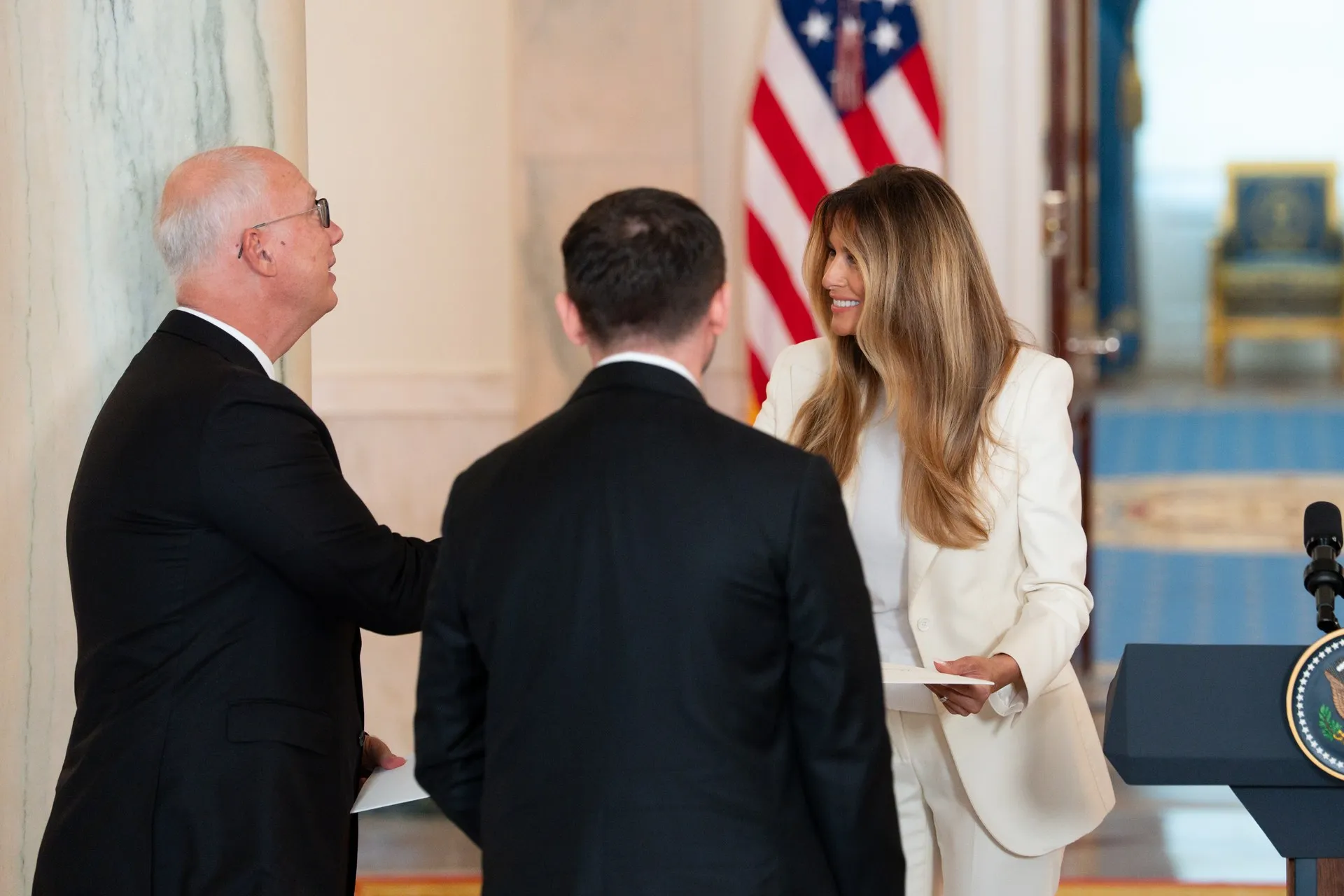
After the ceasefire, Lubinets and Lantratova jointly asked Melania Trump to extend such missions to other towns; according to Ukrainian media, the appeal was Lantratova’s idea. The sides agreed to bring aid to Oleshky at least once a month, and Ukraine, together with its partners, is drawing up a list of towns and villages for new missions. Melania Trump called Oleshky a starting point and, at the meeting itself, handed the delegations personal letters to Putin and Zelensky.
Melania Trump ended the letter with which it all began with the words “The time is now.” Last summer, in Alaska, it sounded like a line from a greetings card. Then it turned out to stand for sappers on the roads of the Kherson region, buses to Anapa, an agreement in two languages and two ombudsmen knocking together on strangers’ doors. For a conflict now in its fifth year, that is not much.
When Lidia drew her picture, she was hardly thinking about diplomacy. She simply wrote the simplest thing she knew how to say in English. The grown-ups in this story could learn something from her: start with the simple things — food, water, the elderly who need to be taken out — and do not wait until everything complicated has been settled. Oleshky showed that this order of things works. I would like to believe that the next drawing brought to Washington will come from more than one town.